

Ditch the sit-ups and build a Core of Steel with these 3 powerful yoga poses. Learn how to tone your belly, improve posture and protect your back.
Table of Contents
Introduction
For years, conventional fitness advice insisted that endless daily sit ups were the golden path to achieving a lean, powerful midsection. Most of us bought into that relentless grind, only to walk away with a stiff neck, an aching lower back and frustratingly little progress to show for all the effort.
Traditional crunches repeatedly flex the spine and isolate only the outermost abdominal tissue, running a constant risk of repetitive strain while completely bypassing the deep stabilizing muscles your body actually needs for real world balance.
Building a true Core of Steel requires moving away from spine compressing crunches and shifting toward integrated, intelligent movement. Yoga offers a far superior approach by engaging your deep transverse abdominis, obliques and pelvic floor simultaneously sculpting a firm, functional center without putting your back at risk.
Developing a functional Core of Steel through targeted yoga postures transforms how you carry yourself every single day. Instead of forcing rapid, jerky movements, static holds like Planks, Side Planks and Chair Pose train your abdominal wall to resist movement and stabilize your entire trunk. This full body engagement decompresses the spine, corrects postural slumping caused by long office hours and strengthens the exact stabilizing muscles that protect your lower back from injury.
When you cultivate a strong Core of Steel on the mat, you build far more than just a flat belly, you gain an upright, confident posture, enhanced athletic power and a resilient, energized foundation that supports your body through every daily activity.
The Deep Muscle Secret Behind a Real Core of Steel
A genuine Core of Steel is far more than just surface level definition, it serves as the foundational powerhouse for virtually every movement your body makes throughout the day. Mindless, painful crunches are officially a thing of the past, as real physical progress happens only when your muscles learn to coordinate and fire together as a single, unified shield.
Traditional exercises tend to isolate only the superficial abdominal layer, leaving the surrounding support structures weak and vulnerable to strain.
By shifting your focus toward full body stability, you train your midsection to act as an integrated unit that absorbs impact, protects your joints and delivers true functional power whether you are lifting heavy groceries, sitting at an office desk or exercising.
This is precisely where conscious movement practices like yoga truly excel over traditional gym routines. Instead of merely crunching the front surface of your stomach, focused stability work activates the transverse abdomen is the deep, internal corset layer wrapped securely around your entire midsection.
Engaging this hidden powerhouse pulls the abdomen inward naturally, relieves tension from your neck and lower back and locks your spine into a safe, optimal alignment.
When you train these foundational deep lying muscles to support your body from within, you build a resilient, functional Core of Steel that guards your posture, enhances your athletic performance and feels as healthy as it looks.
Ultimately, unlocking this deep muscular activation changes how your body carries itself through every hour of the day. When these internal stabilizer layers are consistently strengthened, they create a natural girdle effect that supports your lower back, improves breath capacity and prevents the postural slumping caused by long hours of sitting.
Instead of relying on brute force or strain, your body learns to move with grace and stable balance.
Committing to intelligent, deep core training ensures that your Core of Steel acts as a permanent thermal shield against injury, empowering you to move through life with complete physical freedom, quiet authority and unshakeable confidence.
1. Navasana (Boat Pose): The Ultimate Deep Core Engagement
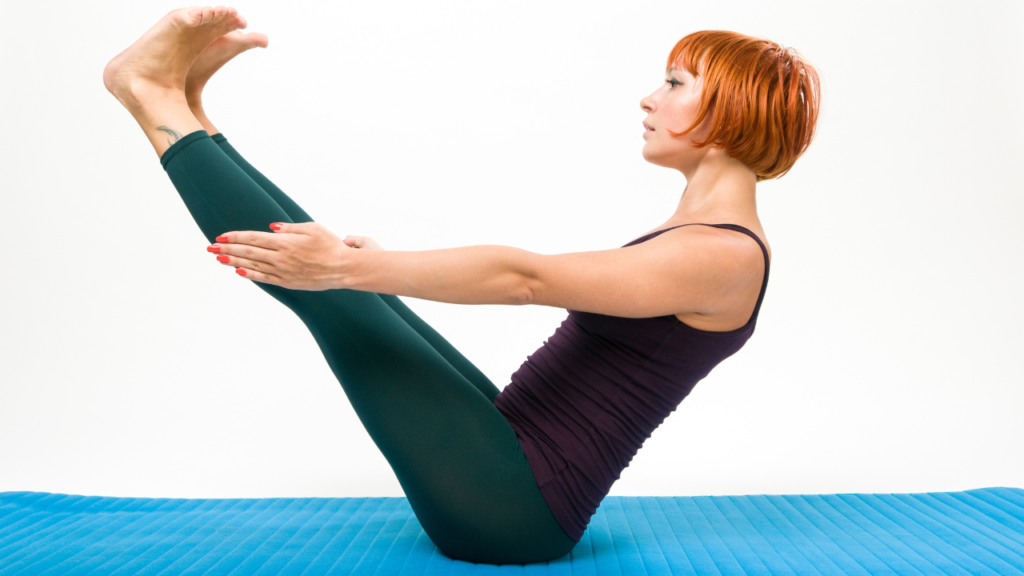
Navasana or Boat Pose, stands as one of the most effective and transformative postures for forging a true Core of Steel. This posture is a complete powerhouse move because it demands simultaneous balance, hip flexor activation and deep abdominal contraction to hold your body in a stable “V” shape.
Unlike conventional sit-ups that rely heavily on quick momentum, jerking neck movements and spinal compression, Boat Pose forces you to rely entirely on isometric, “static hold” strength.
Balancing on your sit bones with your legs elevated and chest lifted creates intense, continuous tension across your entire midsection. This sustained effort builds incredible muscular endurance, training your abdominal wall to stay engaged and supportive over extended periods rather than just during quick repetitions.
What makes Navasana so essential for developing a Core of Steel is how deeply it activates your hidden postural stabilizers. As you fight gravity to keep your spine straight and legs lifted, your transverse abdominis the deep internal muscle corset engages alongside your obliques, lower back and deep hip flexors.
This comprehensive activation pulls your belly in naturally, strengthens your pelvic foundation and reverses the rounded, slouched posture caused by long hours at a office desk.
Consistently holding Boat Pose conditions your nervous system to stabilize your spine under pressure, forging a resilient Core of Steel that enhances your overall balance, protects your lower back from everyday strain and builds effortless confidence in every movement.
Step-by-Step Execution: Find Your Foundation: Start by sitting on your yoga mat with your knees bent and feet flat on the floor. Place your hands behind your hips for support.
The Lift: Lean back slightly, keeping your spine long and straight (do not hunch!). Lift your feet off the floor until your shins are parallel to the mat. This is the “Half Boat.”
The Extension: If you feel stable, extend your arms forward alongside your legs, palms facing inward. For an extra challenge, slowly straighten your legs until your body forms a “V” shape.
The Breath: Hold this for 5 to 10 deep breaths. Focus on pulling your belly button in toward your spine to keep your lower back from arching.
Detailed Benefit: This pose targets the Rectus Abdominis (the “six-pack” muscles) and the Transverse Abdominis (the deep core). It also strengthens the hip flexors and the muscles of the spine, which are often weak in people who sit at desks.
2. Phalakasana (The Plank): Building Full-Body Stability
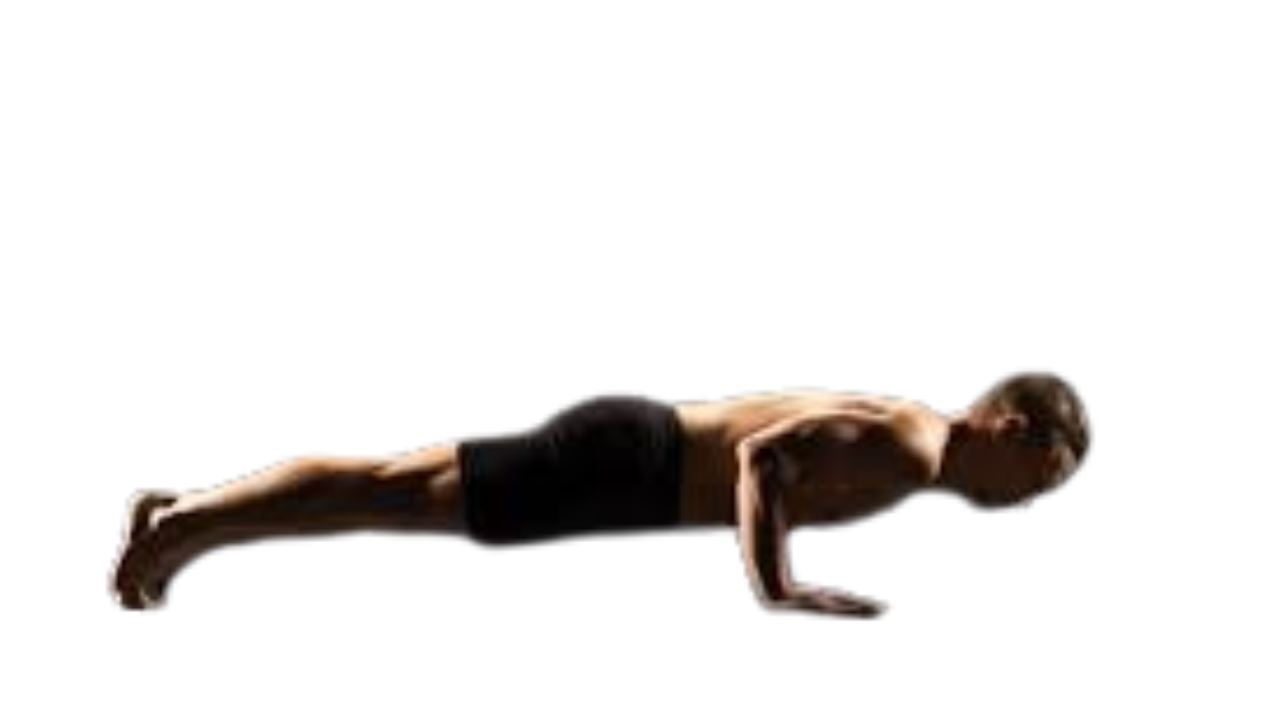
Phalakasana (The Plank): Building Full-Body Stability Phalakasana, universally known as The Plank, stands as the absolute gold standard for functional core training and spinal protection. At its foundation, the Plank is an isometric movement, meaning your muscles are contracting intensely to hold your entire body in a single, rigid line without any movement or joint flexion.
Unlike traditional sit-ups that repeatedly bend and compress the spine, holding a Plank forces your midsection to act as a solid, shock absorbing bridge between your upper and lower body.
This static resistance is the single most effective way to forge a true Core of Steel, teaching your abdominal wall, obliques and lower back muscles to work as a unified shield that stabilizes your spine during everyday physical activities.
What makes Phalakasana such a transformative pose for developing a Core of Steel is its ability to integrate the deep, structural muscles of your midsection with your entire kinetic chain.
As you press firmly through your palms, broaden across your shoulder blades and engage your glutes and thighs, your deep transverse abdomen contracts to prevent your hips from sagging. This full body engagement reverses the slouched, rounded posture that develops from long hours at an office desk, while taking immense strain off your lower back.
Consistently practicing the Plank builds an unshakeable Core of Steel that enhances your overall physical endurance, elevates your daily posture and provides a durable foundation of strength for every movement you make.
Step-by-Step Execution: Set the Base: Start on all fours with your wrists directly under your shoulders.
The Alignment: Step your feet back one at a time. Your body should form one straight line from the crown of your head down to your heels.
The Lockdown: Engage your thighs and squeeze your glutes. This prevents your hips from sagging, which is the most common mistake. Imagine pulling your elbows toward your toes (without actually moving them) to fire up your upper abs.
The Gaze: Look at the floor about 6 inches in front of your hands to keep your neck in a neutral, pain free position.
Detailed Benefit: The Plank is a total core move. It builds the “bracing” strength needed for heavy lifting and better posture. It also tones the shoulders and glutes, making it a highly efficient calorie burner.
3. Vasisthasana (Side Plank): Sculpting the Obliques
Vasisthasana
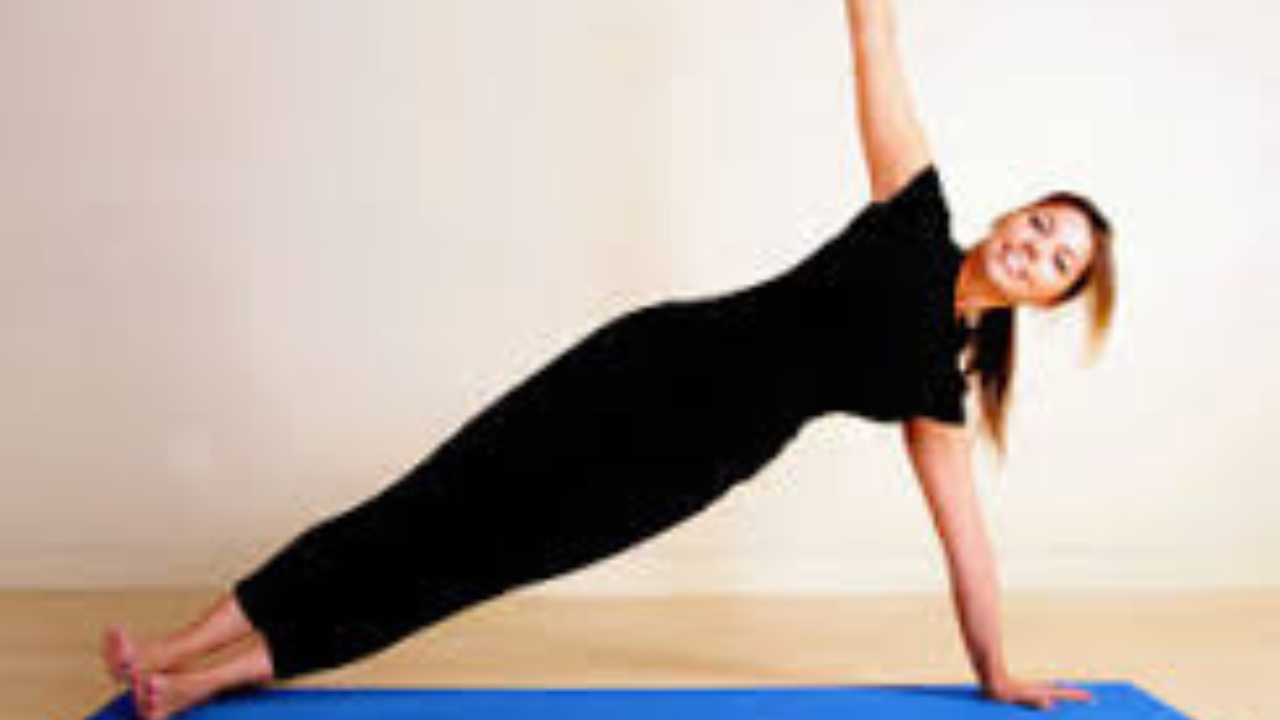
widely known as Side Plank, is an essential posture if you want to sculpt a balanced midsection while forging a true Core of Steel. To achieve a genuinely strong, functional belly, you cannot focus solely on the front abdominal wall you must give equal attention to the sides of your waist.
Side Plank directly targets your oblique muscles, which run diagonally along your torso and are responsible for crucial daily movements like twisting, side bending and stabilizing your upper body. Supporting your entire weight on one hand and the outer edge of your foot forces your internal and external obliques to contract intensely, lifting your hips away from the floor and keeping your spine in perfect, suspended alignment.
Beyond building sharp lateral strength, incorporating Vasisthasana into your routine is vital for developing an all around Core of Steel that guards your body against everyday imbalances. Holding your frame sideways against gravity challenges your deep stabilizer muscles, including the quadratus lumborum in your lower back and the gluteus in your hips.
This unilateral engagement corrects muscle imbalances between your left and right sides, relieves uneven pressure on your spinal discs and dramatically improves your overall rotational power and balance.
Making Side Plank a staple in your practice builds a resilient Core of Steel that enhances your posture, refines your waistline and provides complete 360-degree stability for every athletic and daily movement you perform.
Step-by-Step Execution: The Pivot: From a standard Plank position, shift your weight onto your right hand and roll onto the outer edge of your right foot.
The Stack: Stack your left foot directly on top of your right. If this is too difficult, you can place your left foot in front of your right for a wider base.
The Reach: Extend your left arm straight up toward the ceiling. Keep your head in line with your spine.
The Lift: The most important part is to push your hips toward the sky. Do not let your bottom hip dip toward the mat. Hold for 30 seconds, then switch sides.
Detailed Benefit: This exercise focuses on the Internal and External Obliques. Strong obliques create a tapered waistline and are the primary muscles that protect your lower back from twisting injuries.
Conclusion
Building a Core of Steel is a journey of quality over quantity. You do not need to perform hundreds of repetitions to see a transformation. By practicing these simple stretches for core strength, you are investing in a body that is as strong as it is toned.
Strength Building a genuine Core of Steel is fundamentally a journey of quality over quantity. You do not need to perform hundreds of painful, repetitive crunches or force yourself through grueling workouts every single day to experience a complete physical transformation.
By intentionally practicing isometric holds and simple, targeted yoga movements for core strength, you engage the deep, stabilizing muscle layers that traditional sit ups simply miss.
This functional approach protects your spine, lifts your posture and ensures you are investing in a midsection that is just as balanced and resilient as it is visually toned. Cultivating a Core of Steel on the mat translates directly into everyday energy, protecting your lower back from daily strain and letting you move through life with effortless physical ease.
Yoga reminds us that true power always originates from the center. When you forge a Core of Steel, you naturally begin to stand taller, sit with effortless alignment at your desk and carry yourself with an undeniable air of calm composure and self assurance. The ultimate objective is far greater than just achieving a flat belly, it is about building a functional, durable frame that supports your body in every setting, from intense daily tasks to high stakes professional environments.
So, roll out your mat, breathe calmly through that natural physical “shake” as your muscles ignite and let these foundational postures redefine what your core can truly accomplish for your health, posture and long term vitality
YOU TUBE VIDEO (Bloom Fitness) in support of Core of Steel: The Best Yoga Poses for a Toned Belly (No Sit-ups Required)
FAQs About Core of Steel: The Best Yoga Poses for a Toned Belly (No Sit-ups Required)
1. How long does it take to see results with yoga for abs?
With a clean diet and practicing 3–4 times a week, most people feel more core of steel “tightness” in 2 weeks and see visible toning in 4–6 weeks.
2. Is yoga better than crunches?
Yes.Yoga works the deep internal muscles (Transverse Abdominis) and the back, whereas crunches mostly hit the “six-pack” surface muscles and can strain the neck.
3. I have a back injury; can I still do these?
Yoga is often recommended for back pain, but you must move slowly. Always consult a doctor first and skip any pose that causes sharp pain.
4. Do I need to be flexible to do Boat Pose?
No! You can keep your knees bent. The core of steel engagement is exactly the same whether your legs are straight or bent.
5. How many times a day should I do these?
Once a day is plenty. Your muscles need time to recover to grow stronger.
6. Will these poses help me lose weight?
Yoga helps tone muscles, but “belly fat” is lost through a combination of a healthy diet and calorie burning activities.
7. Can I do these on my bed?
It is better to use a firm surface like a yoga mat on the floor. Beds are too soft and can cause you to lose your alignment.
8. What if my wrists hurt during Plank?
You can do a “Forearm Plank” by resting on your elbows instead of your hands. It is just as effective for your abs!
9. Why do I shake during Boat Pose?
Shaking is good!It means your nervous system is working hard to recruit new muscle fibers. It is a sign of progress.
10. Is "Side Plank" safe for beginners?
Yes.If it is too hard, drop your bottom knee to the floor for extra support while you build your strength.