

Master the art of the perfect plank pose with our expert guide to achieving Full-Body Stability without the strain. Discover technical alignment tips.
Table of Contents
Introduction
In the evolving world of fitness, we are finally moving away from the “no pain, no gain” mentality and toward movements that prioritize longevity and functional strength. If you are looking for a single exercise that can transform your posture, protect your spine and tone your entire midsection.
Unlike traditional crunches that often put unnecessary pressure on the neck and lower back, the Plank focuses on full-body stability by forcing your muscles to work together as a single, unshakeable unit.
Full-body stability is the foundation of every physical activity, from lifting heavy groceries to performing advanced yoga flows. By mastering the stillness of the Plank, you are not just building “six pack” muscles, you are strengthening the deep, internal “corset” of your core and the stabilizing muscles around your shoulders and hips.
This guide is designed to help you achieve that peak level of full-body stability while teaching you the technical secrets to avoid wrist strain and back fatigue, ensuring your fitness journey is both powerful and sustainable.
Step-by-Step: How to Perform the Perfect Phalakasana
In order to master a full-body stability, you must treat the Plank not as a passive rest but as an active, full-body engagement where every muscle is working toward a common goal. This level of full-body stability is achieved by creating a “kinetic chain” from your hands to your toes, ensuring there are no weak links in your form.
By consciously pushing the floor away to broaden the space between your shoulder blades and simultaneously tucking your tailbone to engage the lower abdominals, you create a rigid structure that resists the pull of gravity. This unwavering focus on alignment is what builds the functional full-body stability necessary to protect your spine and improve your overall athletic performance.
When you hold this pose correctly, you are teaching your nervous system how to maintain full-body stability under tension, which translates directly into better balance and a more resilient physique in your everyday life.
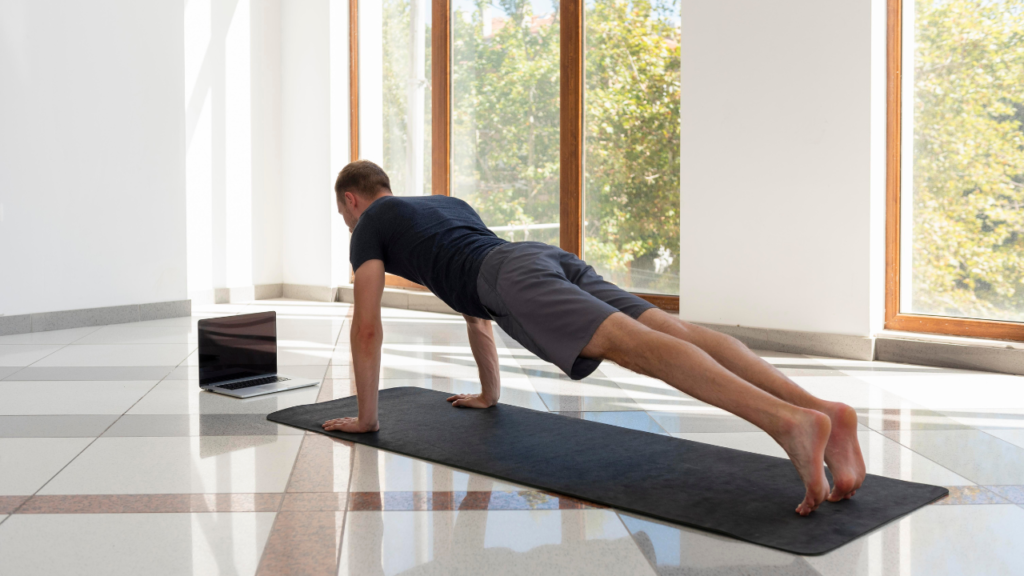
Every moment spent in correct alignment is a step toward total full-body stability. With patience and persistence, the stillness of the plank will become your greatest source of power, turning your fitness goals into a reality and building a core of steel that lasts a lifetime.
Consistency is key. Start by holding your plank for 30 seconds a day and slowly add 5 seconds each week. Before you know it, that “shake” will turn into a solid, unshakeable core of steel.
Understanding Full-Body Stability: The Tension Distribution Secret
The biggest misconception about the plank is that it is simply an “ab exercise.” When people assume the stomach is supposed to do all the heavy lifting, the pose quickly becomes miserable. Gravity pulls down on your center of gravity, your midsection sags, your arms begin to tremble violently and within seconds, your lower back starts taking the brunt of your entire body weight. The stability is never about overworking one single muscle group while the rest of your body hangs on for dear life. Instead, it relies on a principle called tension distribution spreading the workload evenly across your entire muscular system so that no single joint or tendon feels overwhelmed.
Think of your body during a plank as a suspension bridge. For the bridge to hold firm without snapping in the middle, every cable must pull its fair share. In a properly executed plank, your muscles form an interconnected chain from the crown of your head all the way to the soles of your feet.
The Upper-Body Foundation: Your hands or forearms are your anchors. Instead of passively leaning into your shoulder joints, you actively press the floor away. This fires the serratus anterior the fan shaped muscle running along your ribs under your armpits. Activating this muscle secures your shoulder blades flat against your rib cage, creating a wide, solid platform that lifts pressure off your rotator cuffs and neck.
The 360-Degree Core Belt: Most people instinctively suck their stomachs in like they are trying to zip tight jeans, which only restricts breathing and locks tension into the throat. Instead, imagine bracing your midsection as if you are preparing for a gentle bump to the stomach. This activates the transverse abdominis, your deep internal corset. It wraps around your organs and spine, sealing off the front and sides of your trunk into a pressure tested cylinder that keeps your lower back completely safe.
The Lower Body Engine: This is the missing piece for most practitioners. Your legs contain some of the largest, strongest muscles in your body, yet during a plank, people often let them go completely limp. When you actively flex your quadriceps to lift your kneecaps, squeeze your glutes gently and drive your heels back as if pushing against a wall, your lower body turns into a rigid support beam. Engaging your legs instantly claims 40 to 50 percent of the total effort, immediately taking the strain off your wrists, shoulders and spine.
When all three zones communicate, the plank stops feeling like a desperate struggle against the floor. It transforms into an effortless feeling, full-body stability lock where energy flows smoothly and every joint feels supported.
Avoiding the Strain: Common Mistakes and Solutions
To master full-body stability, one must understand that even the smallest misalignment can lead to unnecessary fatigue or injury rather than strength. Many practitioners mistakenly allow their hips to sag toward the mat or their lower back to arch excessively, which immediately breaks the kinetic chain and shifts the workload from the core to the lumbar spine, sabotaging the goal of achieving total full-body stability.
Another common error is “dumping” all the body’s weight into the heels of the hands, which creates a painful strain on the wrists, this is easily solved by actively clawing the fingertips into the mat and shifting the energy through the forearms.
Furthermore, holding the breath is a frequent mistake that creates internal tension and prevents the muscles from receiving the oxygen they need to maintain full-body stability during longer holds.
By correcting these technical flaws such as keeping the neck neutral and the glutes squeezed, you ensure that the pose remains a high performance tool for building full-body stability without the nagging aches that often discourage beginners from sticking to their yoga practice.
Common Alignment Traps and How to Fix Them
Even with the best intentions, the full-body stability will naturally search for the path of least resistance when fatigue sets in. These subtle postural cheats might make the hold feel temporarily easier, but they dump mechanical stress directly into vulnerable joints like your lumbar spine, neck and wrists. Here is how to spot the four most common alignment traps and correct them immediately:
1. The Sagging Banana Back
The Trap: As your abdominal wall tires, gravity pulls your hips toward the mat. Your pelvis tilts forward, creating a deep, exaggerated sway in your lower back. You will usually feel this as a dull ache or sharp pinching sensation in your lumbar spine.
The Fix: Reset your pelvis right away. Think about gently tucking your tailbone down toward your heels, similar to how a dog tucks its tail. At the same time, draw your belly button up toward your breastbone. This subtle posterior pelvic tilt instantly flattens out the lower back and snaps your deep core muscles right back on duty. If you cannot maintain this neutral line, drop your knees to the mat for a few breaths protecting your spine is far more important than keeping your knees lifted.
2. The Collapsed Shoulder Blades (Winged Scapulae)
The Trap: You stop pressing through the floor, causing your chest to sink between your upper arms. Your shoulder blades pinch together and stick out like wings behind your back. This dumps your entire full-body stability weight directly into your shoulder sockets and causes the muscles at the base of your neck to seize up.
The Fix: Visualize pushing the floor as far away from your chest as possible. Imagine you are trying to fill the space between your shoulder blades by doming your upper back very slightly toward the ceiling. Keep your collarbones broad and open so you do not round into an awkward hunch. This simple cue widens your upper back, locks the shoulder girdle into place and creates an unshakeable platform.
3. The Sleeping Legs Syndrome
The Trap: Your knees soften, your thighs relax and your feet simply flop behind you. Without the legs actively working, your upper body and lower back are forced to carry twice the necessary load, leading to rapid burn out and trembling wrists.
The Fix: Turn the power back on from the waist down. Actively push the backs of your knees toward the sky to fire your quads and press firmly backward through the balls of your feet into your heels. Imagine you are standing tall against the floor. The moment your legs ignite, you will feel an immediate wave of relief wash over your shoulders and core.
4. The Dropped “Heavy” Head
The Trap: When fatigue hits, people often drop their chin toward their chest to stare back at their toes or they crank their neck upward to watch the clock on the wall. Dropping your head adds roughly 10 to 12 pounds of unsupported weight pulling on your cervical spine, leading to stiff neck muscles and tension headaches.
The Fix: Keep your cervical spine neutral by fixing your gaze at the floor about six to eight inches ahead of your fingertips. Think of keeping the back of your skull, your upper back and your hips all touching an imaginary straight stick. Lengthen the back of your neck as if reaching the crown of your head toward the front wall, allowing your breath to travel freely without compression.
Conclusion
Mastering Phalakasana is about far more than just “holding a position” it is about cultivating a profound sense of full-body stability that permeates every aspect of your physical life. We understand that true fitness is not found in isolated movements, but in the body’s ability to act as a unified, coordinated force.
By dedicating time to perfecting your plank, you are investing in a foundation that protects your joints, improves your posture and provides the essential full-body stability needed to excel in more advanced yoga poses and daily activities alike.
Beyond the physical gains, the journey toward full-body stability is a mental one. The “shake” you feel during a long hold is a signal of growth, requiring breath, focus and determination to overcome. When you commit to a consistent plank practice, you are not just toning your midsection, you are training your mind to remain calm and centered under pressure.
This mental clarity, combined with the structural full-body stability you have built, ensures that you move through the world with a sense of confidence and poise that is truly unshakeable.
FAQs About The Ultimate Guide to the Plank Pose: Achieve Full-Body Stability Without the Strain
1.How long should I hold a plank?
For beginners, 20–30 seconds is great. For advanced stability, aim for 60–90 seconds.
2. Can I do planks every day?
Yes, as long as your form is perfect. It is a lowi mpact way to keep your core engaged daily.
3. Why do I shake during a plank?
Shaking is a sign of “neuro-muscular fatigue.” It means your brain is recruiting new muscle fibers to stay upright. It is a sign of growth.
4. Is a forearm plank better than a high plank?
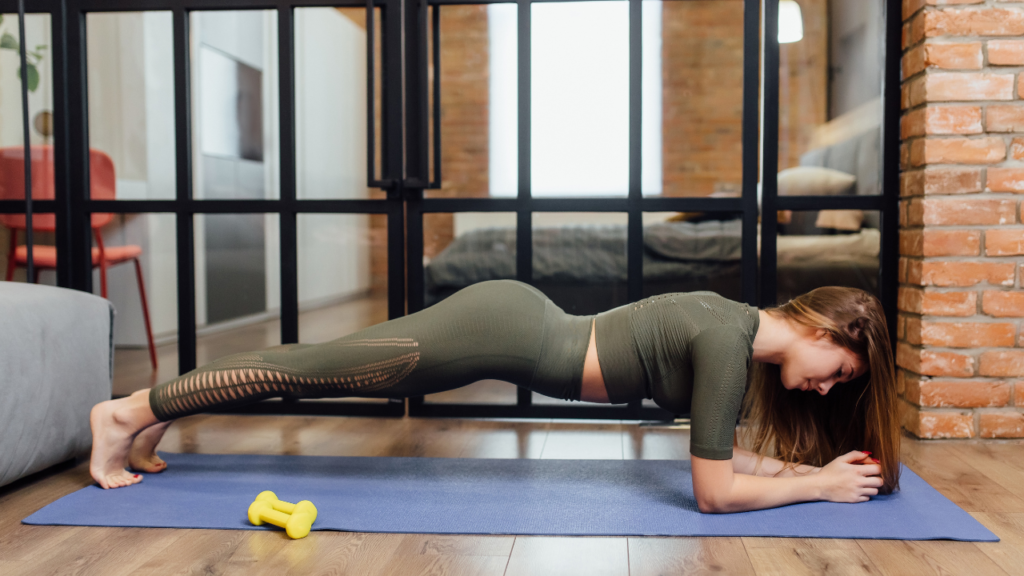
Neither is “better” High planks work the shoulders more, while forearm planks often feel more intense in the deep core.
5. Will planks give me a six-pack?
Planks tone the entire stomach area, but visible abs also depend on your diet and overall body fat percentage.
6. I feel it in my lower back. What’s wrong?
Your hips are likely sagging. Squeeze your glutes harder and tuck your tailbone slightly.
7. Is the plank safe for people with high blood pressure?
Since it is an isometric hold, it can raise blood pressure. Consult a doctor if you have cardiovascular concerns.
8. How do I make my plank harder?
Try “Plank Taps” (tapping your shoulders while holding the pose) or wearing a weighted vest.
9. Can planks fix my posture?
Absolutely.They strengthen the muscles around the spine and shoulders that prevent slouching.
10. What is the best time of day to plank?
Morning is best to “wake up” your core for the day’s activities.
11. Do I need a yoga mat?
It helps with grip and cushions your wrists/elbows, but you can do it on any non slip surface.
12. Can I do planks during pregnancy?
It is usually safe in early stages, but you should switch to modified versions later on.