

Master the downward dog (Adho Mukha Svanasana) with our guide. Use this essential pose to fix your posture and build a more flexible, powerful body.
Introduction
In the world of yoga and functional fitness, few movements are as iconic or as transformative as the downward dog. When exploring the physical practices that bridge the gap between daily desk work and long term physical vitality, few movements hold the revered status of Adho Mukha Svanasana, universally known as the downward dog. Often referred to by seasoned yoga instructors and movement experts as the “King of Foundations,” this single posture serves as the ultimate benchmark for functional flexibility, core stability and total body integration.
It is a deceptively simple shape an inverted “V” formed on the mat, that simultaneously stretches, strengthens and realigns your entire muscular frame from the soles of your feet up to your fingertips.
At its core, a strong, resilient body is the true foundation of personal longevity and physical confidence. In an era where long hours spent hunched over laptops, steering wheels and phone screens lead to tight hamstrings, rounded shoulders and chronically compressed lower backs, the downward dog acts as a powerful physical antidote.
By actively driving your hips upward while anchoring firmly through your hands and feet, you create a natural, decompression stretch throughout your entire spinal column. This gentle traction opens up tight thoracic muscles, reverses postural fatigue, and restores natural length to compressed intervertebral discs, making it an essential daily practice for anyone seeking relief from executive desk strain.
Beyond its immediate postural benefits, mastering the downward dog transforms how your body manages weight, tension and movement off the mat. It challenges your upper body strength by conditioning your shoulders and wrists, while simultaneously building deep core awareness and hamstring elasticity.
Whether you use it as an energizing morning stretch to kickstart your circulatory system, an active recovery movement after an intense workout or a grounding reset in the middle of a busy workday, incorporating this foundational pose into your routine guarantees a more supple, balanced and resilient body that carries you effortlessly through life.
Why downward dog pose is Called the "King of Foundations"
The title “King of Foundations” is not awarded lightly the downward dog earns this distinction because it acts as an extraordinary “all in one” movement that accomplishes multiple physical goals simultaneously.
In a single pose, it functions as a deep structural stretch, an active strength builder and a restorative mild inversion, rather than isolating individual muscles in a rigid, unnatural way, this posture demands that your entire body operate as an integrated, intelligent system.
From the tiny stabilizing tendons in your wrists and forearms all the way through your shoulders, core, glutes, hamstrings and calves, every major muscle group is called upon to work in harmony. This full body recruitment creates a balanced baseline of functional strength, ensuring your body learns how to distribute weight and tension efficiently across every movement you perform.
What truly elevates the downward dog above other exercises is its unique ability to lengthen tight, over used muscles while building endurance in the areas that support your posture. As you press the floor away, your chest melts back toward your thighs, gently opening tight shoulders, stretching a stiff upper back and releasing built in tension along your entire posterior chain.
At the same time, your arms, back and deep core muscles are actively engaged to maintain structural integrity against gravity. Because your heart rests slightly above your head in this inverted position, the pose also promotes fresh blood circulation toward your brain, delivering a rapid wave of mental clarity and calm without putting excessive stress on your cardiovascular system.
Ultimately, mastering this foundational posture sets the stage for every other exercise, yoga flow or daily movement in your life. By training your brain and body to find stability, length and steady breath inside a complex full body shape, you establish a resilient physical baseline that protects your joints from injury and undoes the cumulative strain of long, sedentary workdays.
Whether you are preparing for a heavy strength training session, resetting your body between long desk meetings or building a lifelong yoga practice, the downward dog stands as the single most effective exercise for cultivating a grounded, supple and enduringly strong body.When you practice downward dog correctly, you are:
Decompressing the Spine: Creating space between the vertebrae.
Building Upper Body Strength: Toning the shoulders, arms and upper back.
Stretching the Posterior Chain: Lengthening the hamstrings, calves and Achilles tendons.
Boosting Circulation: Bringing fresh oxygenated blood to the brain.
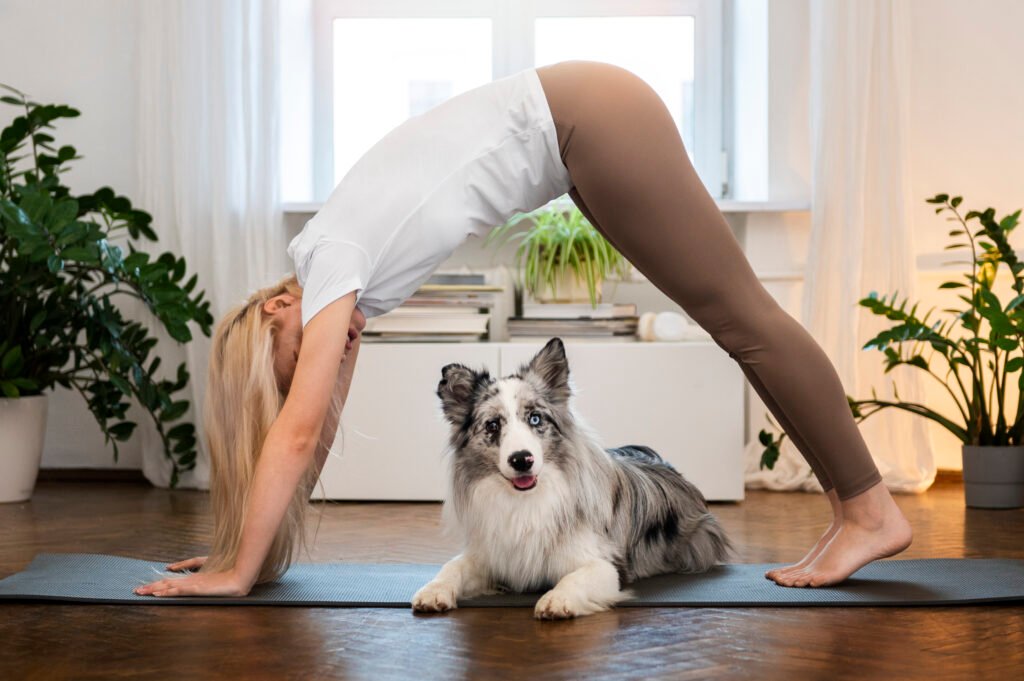
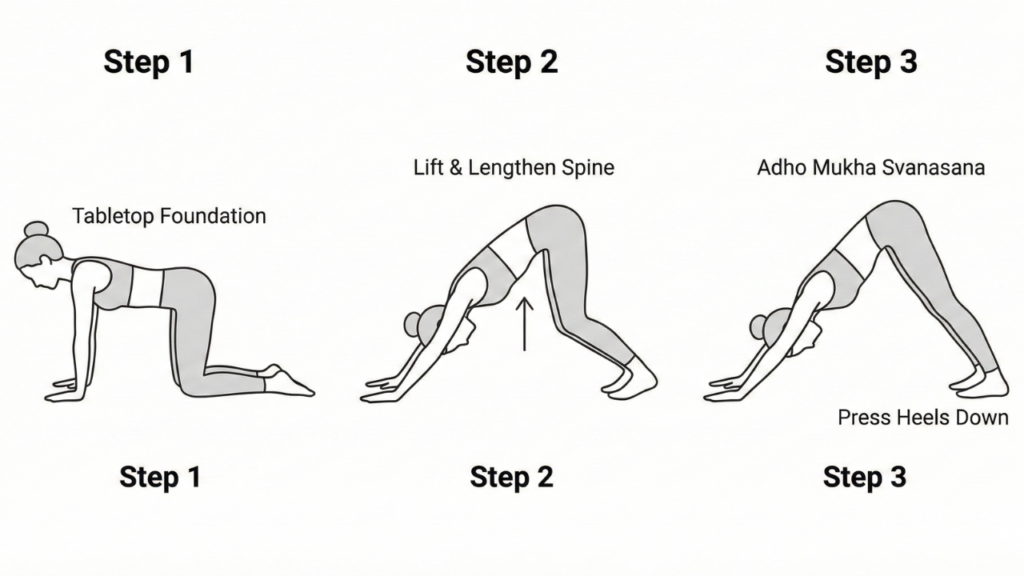

The Anatomy of a Perfect Downward Dog Pose
To get the physical benefits of this pose, alignment is everything. Here is how to build your downward dog from the ground up.
- The Hand Foundation
Spread your fingers wide on the mat. Press your weight into the “L shape” formed by your thumb and index finger. This protects your wrists and creates a stable base. Press your hands firmly into the floor.

2. The Spine and Hips
The most common mistake is focusing on straight legs too soon. The priority of the downward dog is a long, straight spine. Lift your sit bones toward the sky. If your back rounds, bend your knees. A straight back with bent knees is much better than a rounded back with straight legs.

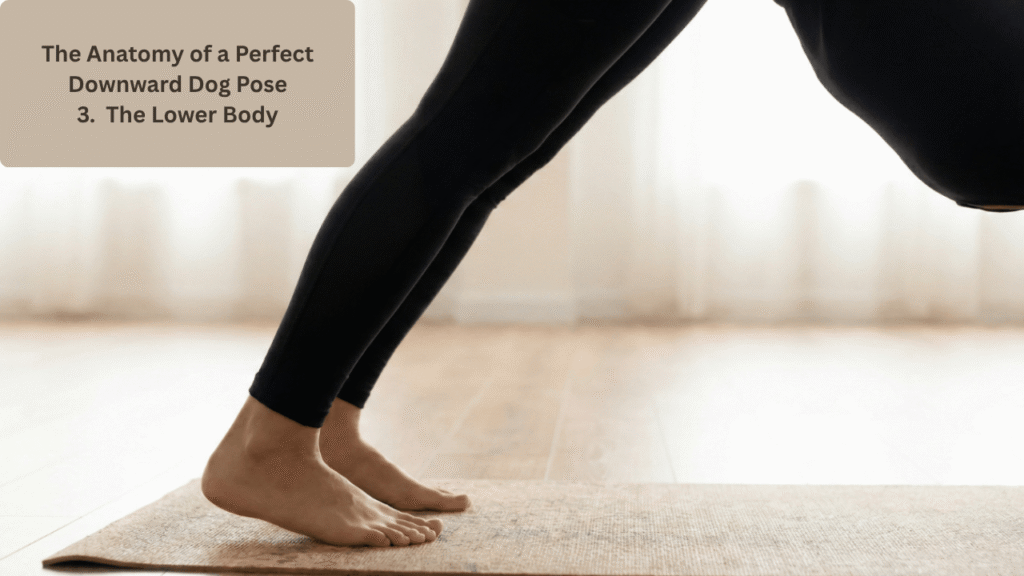
3. The Lower Body
After straightening your back, slowly lower your heels toward the ground. They do not have to touch. The “pull” you feel in your calves and hamstrings is the pose doing its work. Line up your feet straight and keep them hip distance apart.
Mastering the Setup: Key Alignment Details for Downward Dog
To master the downward dog, everything begins with establishing an unshakeable connection to your mat. Your hands serve as the primary anchors of the posture and how you set them determines the health of your wrists. Spread your fingers wide, creating a broad, stable base like a starfish and consciously press down through your palms, index fingers and knuckles.
Avoid the common mistake of “cupping” the mat or leaning all your weight into the outer heels of your hands, as this places excessive, concentrated pressure directly onto your wrist joints. As you press the floor away, turn your upper arms slightly outward to broaden your upper back. This subtle external rotation creates spaciousness around your neck and draws your shoulders away from your ears, preventing that tense, hunched shrugging that leads to stiff neck muscles after a long day at work.
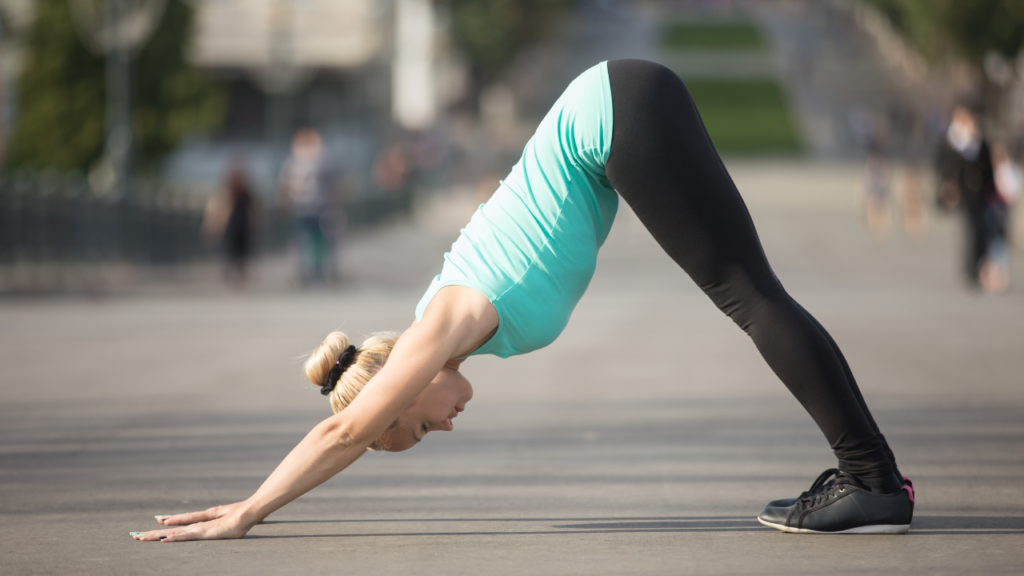
Once your hands and shoulders are locked into place, focus on the continuous line of energy running through your spine. The ultimate goal in downward dog is not to force your legs straight, but rather to create a long, uncompressed line extending from your wrist joints all the way up through your tailbone.
To achieve this lengthened spine, avoid rounding your upper back into a “hunchback” shape, instead, lift your sit bones high toward the ceiling and let your chest melt gently back toward your thighs. Keep your legs active, but maintain a soft micro bend in your knees especially if your hamstrings or lower back feel tight. Allowing the knees to stay slightly soft prevents you from locking out your joints, protects your hamstrings from overstretching and allows your pelvis to tilt forward so your spine can lengthen freely.
Finally, finishing the pose with proper head and neck placement ensures that your nervous system remains calm while you hold the shape. It is natural to want to look forward toward your hands, but craning your neck upward compresses your cervical spine and introduces unnecessary tension right at the base of your skull. Instead, relax your neck completely and allow your head to hang naturally between your upper arms, maintaining a soft gaze back toward your knees or navel.
By keeping your eye line pulled back, your neck stays in a neutral, relaxed extension of your spine. This allows you to breathe deeply, release built up upper body fatigue and experience the full, restorative power of a properly aligned pose.
When hamstrings are tight, the body naturally pulls the lower back into a rounded, “hunchback” shape, dumping unwanted pressure into the lumbar spine and wrists.
Bend the Knees Generously: This is the most effective adjustment. Keeping a soft or even deep bend in your knees immediately releases tension along the backs of your thighs. This allows your pelvis to tilt forward, lifting your sit bones high toward the ceiling so your spine can lengthen completely.
Elevate the Heels: Do not worry if your heels do not touch the mat. Keep your heels lifted as high as needed or place a rolled up yoga mat or blanket directly beneath your heels for support. Removing the urge to force your heels down keeps the focus entirely on lengthening your back.
Widen Your Stance: Step your feet out as wide as the edges of your yoga mat. A wider base decreases the angle of hamstring stretch and creates more space in your hip sockets, making it significantly easier to keep your lower back flat and comfortable.
When shoulders are tight or immobile, pressing through the floor can cause painful pinching in the upper back, neck compression or heavy dumping of weight directly into your wrists.
Elevate Your Hands with Blocks or a Chair: Place two yoga blocks flat against a wall at the front of your mat and place your hands firmly on them. Raising your hands reduces the angle of shoulder flexion needed to maintain the inverted position. For severe shoulder stiffness or desk fatigue, place your hands on the back of a sturdy chair or a desk edge and hinge at your hips for a standing wall dog variation.
Turn Your Hands Slightly Outward: Rather than pointing your middle fingers straight ahead, angle your hands slightly outward so your index fingers point toward 11 o’clock and 1 o’clock. This subtle wrist tweak opens up space in the shoulder joint, encouraging natural external rotation and taking pressure off tight rotators and traps.
Widen Your Hand Distance: Place your hands slightly wider than shoulder width apart near the outer edges of your mat. A broader hand distance creates instant breathing room for your neck and collarbones, preventing your upper back from rounding or hunching up toward your ears.
If both your legs and shoulders feel tight after a long day at a desk, combine these adjustments, widen both your hands and feet, keep your knees deeply bent and place your hands elevated on two sturdy blocks. This creates a supportive, strain free posture that elongates your spine safely while you gradually build full body mobility.
Conclusion
The downward dog is far more than just a classic yoga shape, it is a fundamental human movement designed to restore balance to your body. By committing to mastering Adho Mukha Svanasana, you are actively investing in a future of effortless mobility, structural balance and long term joint health. It earns its title as the “King of Foundations” because it delivers a complete, full body reset within a single, powerful movement.
By strengthening your upper body and shoulder girdle while gently decompressing your entire spine, it serves as the ultimate antidote to the dreaded “forward slump” caused by long hours spent hunched over laptops, smartphones and office desks.
Beyond the deep, relieving stretch it provides along your hamstrings, calves and lower back, this foundational posture functions as a gentle, restorative inversion. By lifting your hips above your heart, it naturally encourages a fresh wave of oxygenated blood flow toward your brain. This subtle circulation boost helps clear away mental fatigue, calms your nervous system and sharpens your cognitive focus for the busy workday ahead.
Instead of relying on passive resting positions, holding this shape teaches your mind and body how to cultivate deep composure and clear breathing right in the middle of a physical challenge.
For the modern professional, mastering the downward dog is about much more than reaching your toes or achieving athletic flexibility. It is about building a resilient, supple physical frame and cultivating the poised, upright posture that naturally radiates executive presence.
Integrating this essential practice into your regular daily routine ensures that you undo the wear and tear of a sedentary lifestyle, protect your spine from injury and carry yourself through every room with grounded strength and lasting confidence.
YOU TUBE Video (Bloom Fitness) in support of Adho Mukha Svanasana: The “King” of Foundations – Downward Dog.
FAQs: About Adho Mukha Svanasana: The "King" of Foundations – Downward Dog
1. Why do my wrists hurt during downward dog?
Usually, this happens when you dump weight into the base of the palm. Try “clawing” the mat slightly with your fingertips to distribute the weight.
2. How long should I hold the pose?
For beginners, 5 to 10 deep breaths is perfect. As you build strength, you can hold it for 1–2 minutes.
3. Is it okay if my heels do not touch the floor?
Yes! Many world class yogis never touch their heels to the floor. It depends on your bone structure and hamstring length.
4. Can downward dog help with headaches?
Yes, because it is a mild inversion, it can relieve tension in the neck and increase blood flow to the head, often easing tension headaches.
5. Is this pose safe for people with high blood pressure?
If you have uncontrolled high blood pressure, consult a doctor first, as the head is below the heart.
6. Why do I feel like I am sliding on the mat?
This is often a sign of a low quality mat or lack of core engagement. Focus on pulling your hands and feet toward each other energetically.
7. Can I do this pose every day?
Absolutely. It is one of the safest and most beneficial daily movements you can perform.
8. What if I have very tight shoulders?
Place your hands slightly wider than shoulder width and turn your index fingers slightly outward.
9. Should I tuck my chin?
Keep your neck in line with your spine. Your ears should be roughly between your upper arms.
10. Does downward dog build muscle?
Yes, it builds isometric strength in the deltoids, triceps and core.