
Cow Pose is Essential for Health: Bitilasana's Basics Introduction
Discover why Cow Pose is essential for health. Master the basics of Bitilasana to unlock spinal flexibility, improve posture and relieve back pain with our expert guide.
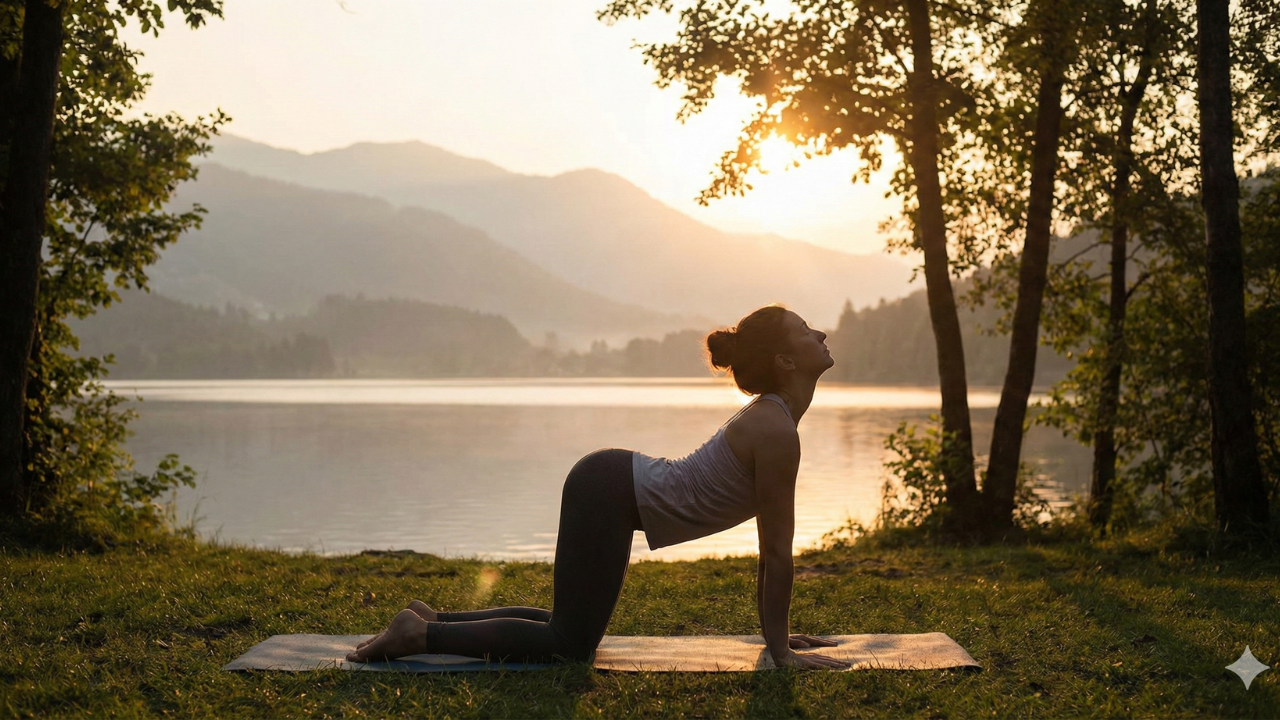
Table of Contents
Introduction
Do you ever finish a long day at your desk feeling like your spine has fused into a permanent slump? You are not alone. In our modern, sedentary world, rigid backs, tight shoulders and shallow breathing have become the norm. Fortunately, yoga offers a simple, profound antidote to these issues and it starts with the fundamentals.
Cow Pose is actually a powerhouse movement essential for maintaining long term spinal health. It is the accessible, gentle backbend that your body is craving.
In this comprehensive guide to Bitilasana’s basics, we will explore why this pose is so vital, how to perform it with perfect alignment and why making it a daily habit can transform the way you move and feel.
What is Cow Pose (Bitilasana)?
Cow Pose is a kneeling posture that involves a gentle, deliberate extension (arching) of the spine.
The Sanskrit name Bitilasana comes from two words: “Bitila” (meaning cow) and “Asana” (meaning pose). The shape mimics the way a cow’s belly sags softly toward the earth while it grazes in a field.
Unlike deeper, more intense backbends like Wheel Pose or Camel Pose, Cow Pose is accessible to almost every body type and fitness level. It is designed to be soothing rather than strenuous.
In the rhythm of yoga, Cow Pose is almost always the “inhale” pose. It uses the breath to expand the front body, opening the chest, throat and abdomen, preparing the spine for movement.
Why Cow Pose is Essential for Your Health
If you only have five minutes a day to dedicate to your physical health, spending them on Cow Pose (usually paired with its counterpart, Cat Pose) is a wise investment.
It addresses the very core of our physical structure, the spine.
Here is why making this pose a staple in your routine is essential for health.
1. Improves Spinal Flexibility and Health
Your spine is designed to move forward, backward, twist and side bend. However, most of us spend our days stuck in one position usually hunched forward over a phone or keyboard. This causes the supportive muscles and fascia around the spine to become rigid.
Cow Pose gently takes the spine in the opposite direction of our daily slump. This movement helps lubricate the spaces between the vertebrae (the intervertebral discs) and keeps the entire spinal column supple and youthful.
2. Corrects Poor Posture ("Tech Neck")
Chronic sitting leads to rounded shoulders and a head that juts forward a condition often called “tech neck.” This puts immense strain on the upper back.
Bitilasana counters this by actively encouraging the shoulders to draw back and down. It opens the pectorals (chest muscles) which are often tight in slouchers. By regularly practicing Cow Pose, you retrain your body to recognize what an open, upright posture feels like.
3. Massages Abdominal Organs
The gentle downward stretch of the belly during the pose provides a soft massage to the internal organs, particularly those in the digestive system. When paired with deep abdominal breathing, this can help aid digestion and encourage regularity.
4. Encourages Deep, Full Breathing
When you slump forward, you compress your lungs and diaphragm, making deep breaths impossible. By opening the chest cavity in Cow Pose, you create physical space for the lungs to fully expand. This invites more oxygen into the body, which can immediately lower stress levels and increase mental clarity.
Step-by-Step Guide: Performing Cow Pose Perfectly
Mastering the basics is crucial to getting the benefits without risking injury. Follow these steps to build a stable and effective Cow Pose.
Step 1
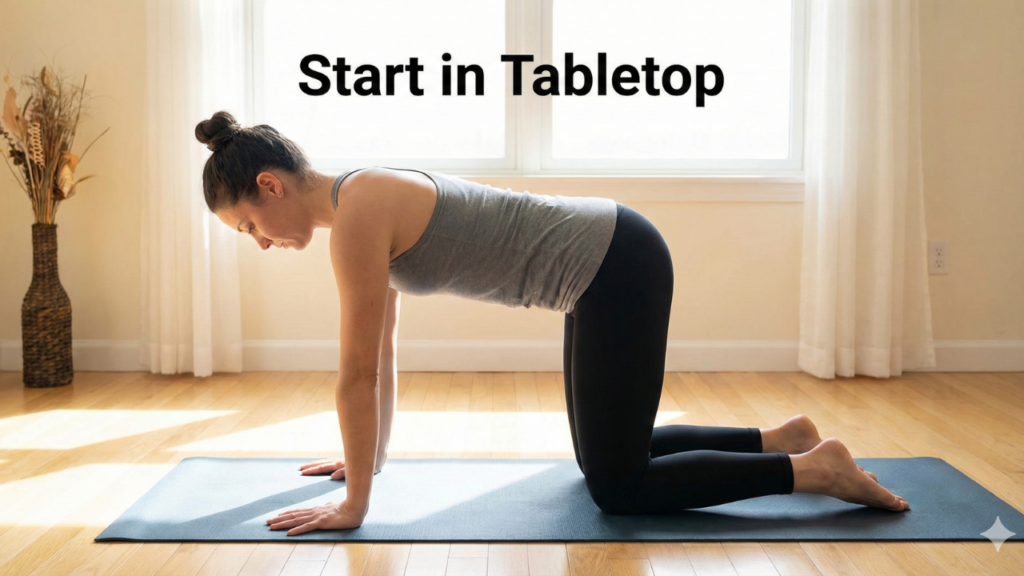
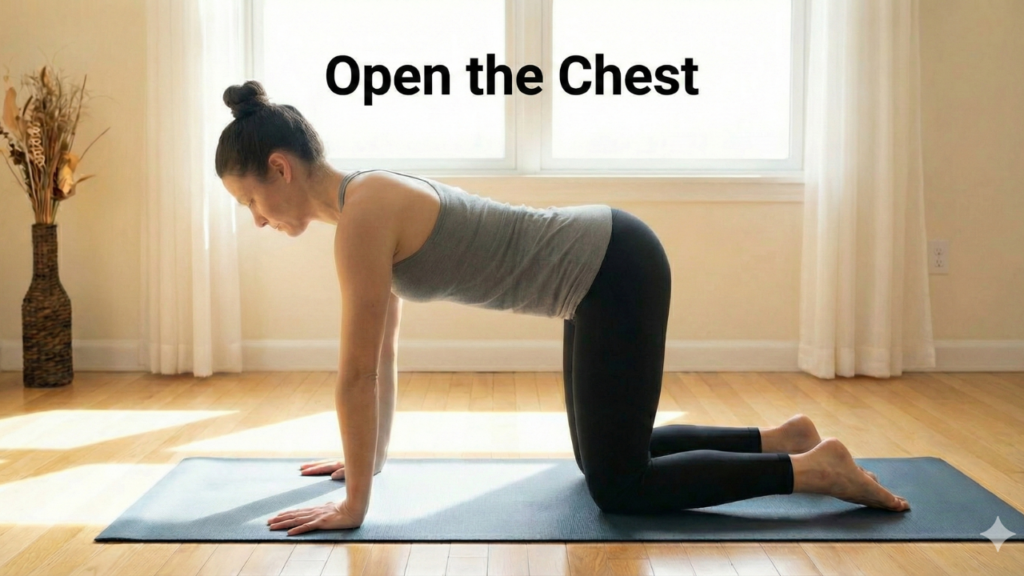
The Foundation (Tabletop) Start on your hands and knees in a neutral “Tabletop” position.
Hands: Ensure your wrists are directly under your shoulders. Spread your fingers wide like starfish and press firmly into your knuckles and fingertips to protect your wrists.
Knees: Ensure your knees are directly under your hips. Your shins should be parallel to each other, with the tops of your feet pressing gently into the mat.
Neutral Spine: Before moving, engage your core slightly so your back is flat like a table. Look straight down at the floor between your thumbs.
Step 2
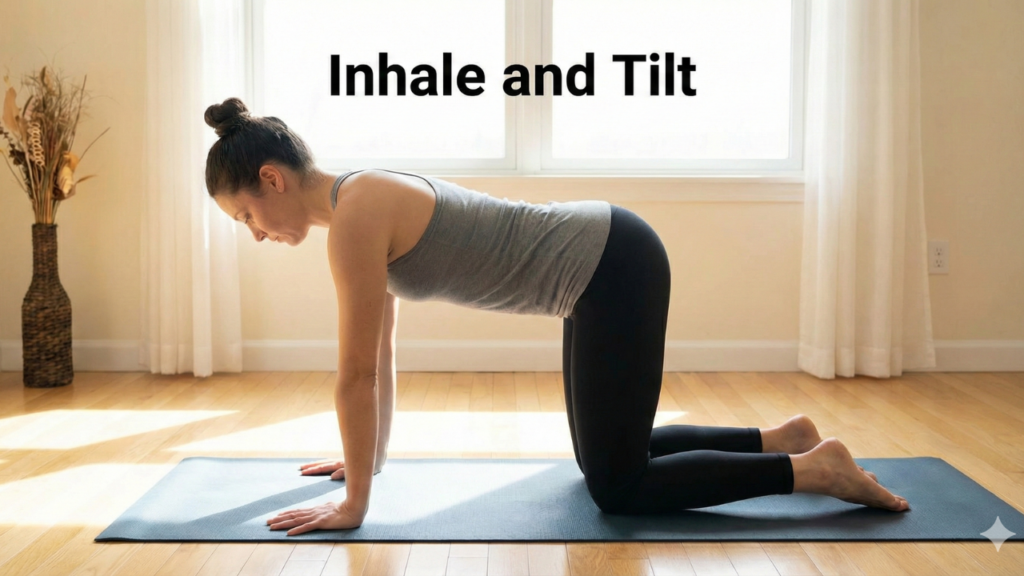
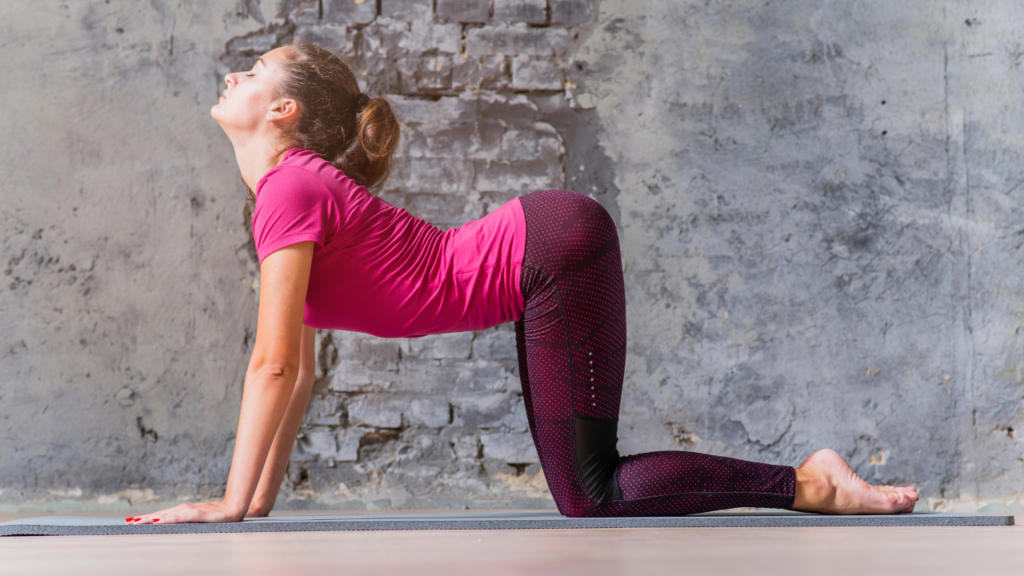
The Inhale and Tilt As you begin a slow, deep inhale:Start the movement at your tailbone. Gently tilt your pelvis so your tailbone lifts toward the ceiling.
Step 3
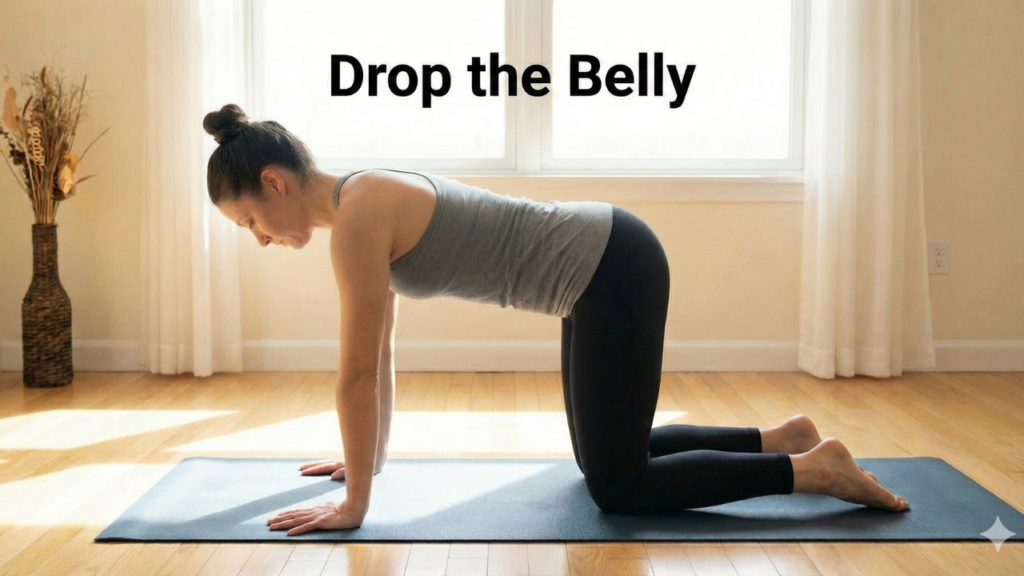
The Ripple Effect Let that tilting movement ripple upward through your spine. Allow your belly to soften and sink toward the floor.
Feel your low back gently arch.
Step 4
Opening the Heart As the breath continues to fill your lungs, Draw your shoulder blades down your back, away from your ears.
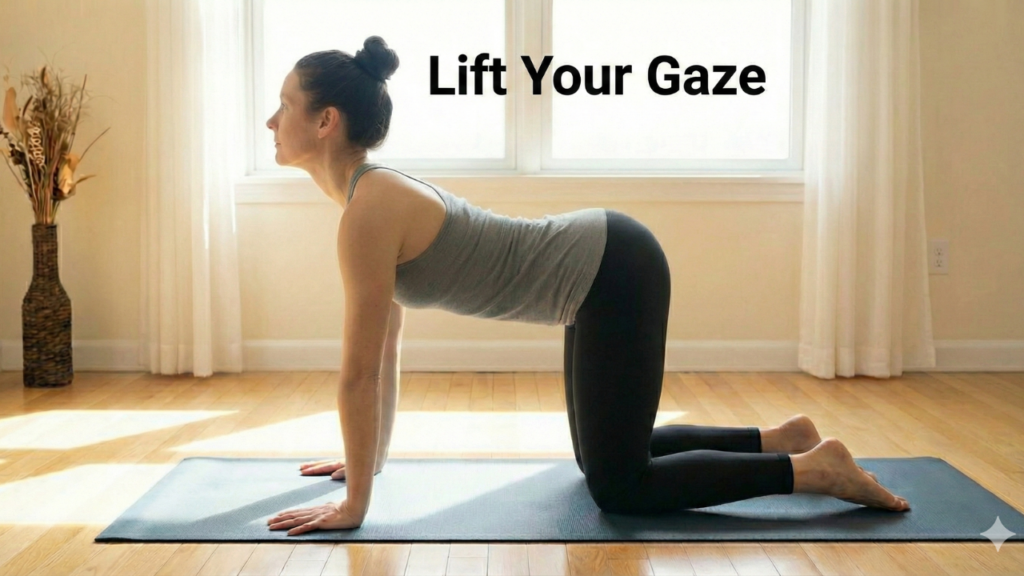
Imagine shining your heart space forward through your upper arms. Gently lift your chin and gaze forward or slightly upward.
Step 5
The Hold Pause for a moment at the top of the inhale, feeling the stretch across your chest and abdomen. Keep your arms straight and strong, pushing the floor away from you.
Common Mistakes in Bitilasana and How to Fix Them
Even in simple poses, small misalignments can reduce effectiveness. Watch out for these common errors when practicing Cow Pose.
1. “Crunching” the Neck
The Mistake: Throwing the head back aggressively to look straight up at the ceiling. This compresses the cervical spine (the neck vertebrae).
The Fix: Focus on creating a long, smooth curve through the entire spine. Keep the back of your neck long. Your gaze should be softly forward, not straight up.
2. Collapsing Into the Shoulders
The Mistake: Letting gravity win and sinking into the shoulder joints, causing the shoulders to creep up toward the ears.
The Fix: Active arms! Press centrally into your hands and actively push the mat away from you to create space between your shoulders and ears.
3. Over arching the Lower Back
The Mistake: Dumping all the movement into the lower back (lumbar spine), causing a pinching sensation.
The Fix: Focus more on opening the upper / thoracic spine (the chest area) rather than just dropping the belly as low as possible.
The Perfect Pair: Flowing into Cat Pose
Cow Pose is rarely practiced in isolation. It is the “yang” to the “yin” of Cat Pose (Marjaryasana). While Cow Pose extends the spine on the inhale, Cat Pose rounds and flexes the spine on the exhale.
To create the classic "Cat-Cow Flow":
Inhale fully into Cow Pose, lifting the head and tailbone.
As you begin to exhale, reverse the movement. Tuck your tailbone, draw your belly button to your spine, round your back toward the ceiling like an angry Halloween cat and drop your head.
Repeat this rhythm 5–10 times, letting the breath guide the movement slowly.
Modifications for Every Body
The goal of yoga is to make the pose fit your unique body, rather than forcing your body to fit the pose. Here is how to make Cow Pose accessible for different needs.
If Your Wrists Hurt: Wrist discomfort is common in Tabletop positions.
Modification: Instead of flat palms, make fists and rest on your knuckles. This keeps the wrists straight and removes the pressure of extension. Alternatively, you can place your forearms on the mat for a lower variation.
If Your Knees Hurt: Kneeling on a hard surface can be uncomfortable.
Modification: Fold a yoga blanket or thick towel and place it under your knees for extra cushioning.
The Office Variation (Seated Cow Pose): You do not need a mat to practice the basics of Bitilasana.
Modification: Sit on the edge of a sturdy chair with feet flat on the floor. Place your hands on your knees. On an inhale, lift your chest, arch your back slightly and look up. On the exhale, round your spine backward. This is perfect for a mid day desk break.
Conclusion
The simplicity of Cow Pose is its greatest strength. It does not require extreme flexibility or strength, yet it offers profound benefits for the modern body.
By mastering Bitilasana’s basics, you are giving your spine the daily care it needs to remain healthy, mobile and pain free.
FAQs about Cow Pose is Essential for Health: Bitilasana's Basics
1. What is the main benefit of Cow Pose?
The primary benefit is improved spinal flexibility. It gently stretches the front of the body and neck while encouraging a healthy range of motion in the vertebrae, making it an essential movement for back health.
2. Can Cow Pose help with back pain?
Yes. By gently arching the back, it helps decompress the spine and relieve tension in the lower and middle back caused by long hours of sitting.
3. Why do we always pair Cow Pose with Cat Pose?
They are “yin and yang” movements. Cow Pose extends the spine (arch), and Cat Pose flexes it (round). Together, they provide a complete warm up for the entire spinal column.
4. Is Cow Pose safe for beginners?
Absolutely. It is one of the most accessible yoga poses and is often the first movement taught to new students to help them connect their breath with physical movement.
5. How long should I hold Cow Pose?
In a flow, you typically hold it for the duration of one full inhale. However, you can stay in the pose for 3–5 breaths to enjoy a deeper stretch in the chest and abdomen.
6. What should I do if my wrists hurt in this position?
Try making fists and resting on your knuckles to keep your wrists straight. You can also move your hands slightly forward of your shoulders to reduce the angle of the wrist bend.
7. Does Cow Pose help with digestion?
Yes. The gentle stretching and “dropping” of the belly provides a soft massage to the abdominal organs, which can stimulate digestion and relieve bloating.
8. Should I look all the way up at the ceiling?
No. It is better to keep the back of your neck long. Lift your gaze forward and slightly up, but avoid “crunching” the back of your neck.
9. Can I practice Cow Pose while pregnant?
Yes, it is often recommended in prenatal yoga. However, as the belly grows, focus more on the chest opening and less on “dropping” the belly to avoid over stretching the abdominal muscles.
10. Is Cow Pose an inversion?
No, it is a gentle backbend. Your head remains above your heart, making it a safe movement for those who may be sensitive to inversions.
Pingback: Mastering the Cat Cow: How to Perfect your Cat Pose (Marjaryasana) -