
The Quality Check: 5 points to Identify Real Premium Leather Jacket Quality
Learn how to identify real premium leather jacket quality like an expert. Our guide covers the smell, texture and grain tests to ensure you buy luxury.
Introduction
Investing in a high end premium leather jacket wardrobe is a signature move for any modern professional. However, with the rise of high quality “vegan” alternatives and synthetic blends, it has become increasingly difficult to distinguish between a cheap imitation and a premium leather jacket luxury investment.
If you want to spend your money wisely, you must know how to identify real premium leather jacket craftsmanship before you hit the “buy” button.
We believe that quality is non negotiable. A real premium leather jacket should not just look good, it should last a lifetime, develop a beautiful patina and offer a level of comfort that synthetics simply cannot match.
In this comprehensive guide, we will walk you through the professional “Quality Check” so you can shop the premium leather jacket with total confidence.
The Science of Touch: Feeling the Difference
The first step to identify real premium leather jacket quality is literally in your hands. Real leather is a natural material and like human skin, it has imperfections.
Texture: Run your fingers across the surface. Real premium leather jacket (especially lambskin or full grain cowhide) feels warm and soft. It should have a slight “grip” to it. If the jacket feels perfectly smooth, cold or plastic like, it is likely a synthetic imitation.
The Wrinkle Test: Press your thumb firmly into the leather.
Real premium leather jacket will wrinkle under the pressure. When you let go, the wrinkles will slowly disappear. Synthetic leather usually just depresses under your finger like a piece of plastic, without the natural radiating wrinkles.
The “Scent” of Luxury: One of the most immediate ways to identify real premium leather jacket authenticity is through your sense of smell. This is the one thing manufacturers have not been able to fake perfectly.
The Natural Aroma: Real premium leather jacket has a distinct, rich and earthy scent. It smells like “quality.” Even after processing and tanning, that organic, musky aroma remains.
The Chemical Warning: If you lean in and smell a sharp, “new car” plastic scent or a heavy chemical odor, stay away. This is a sign of “Pleather” (Polyurethane) or a low grade hide that has been heavily treated with chemicals to hide flaws.
Pores and Grains: Nature’s Fingerprints
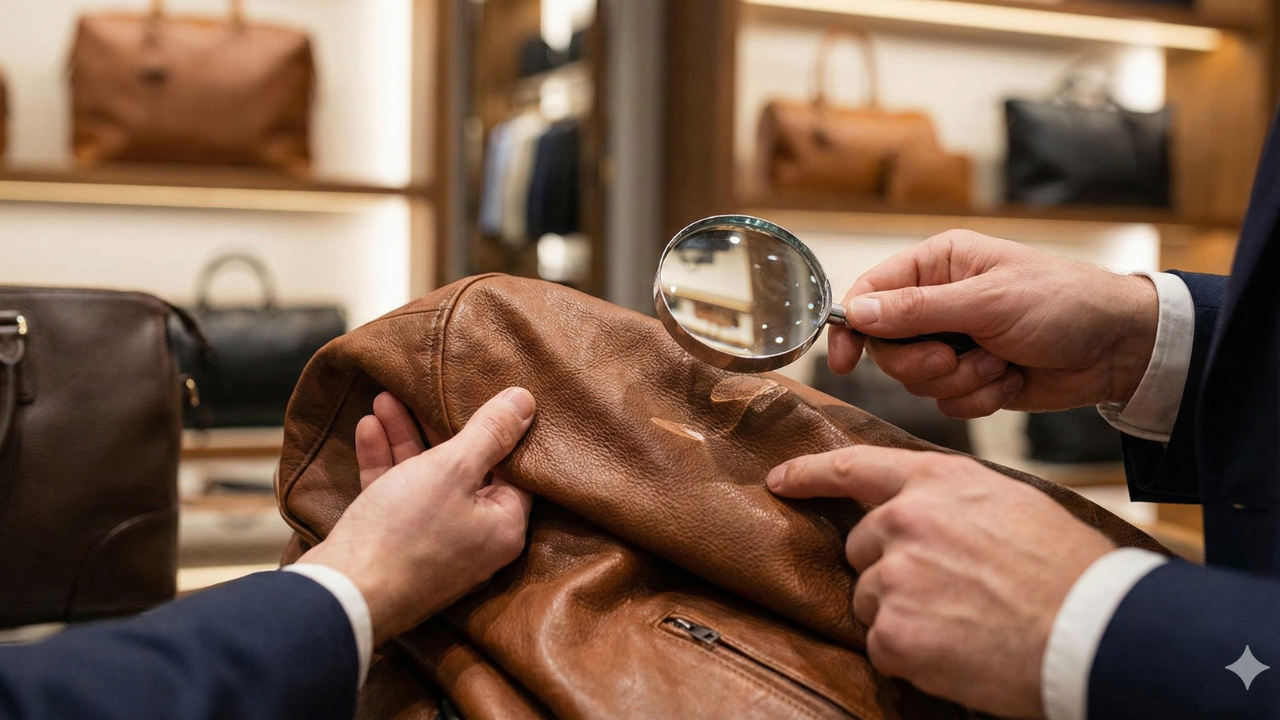
To identify real premium leather jacket quality, you have to look closely sometimes with a magnifying glass.
Real leather comes from an animal, which means it has pores. In high end full grain leather, these pores are visible and slightly irregular. If the “grain” pattern of the jacket looks perfectly repetitive (like it was stamped by a machine), it probably was.
Luxury jackets celebrate the slight irregularities of the hide, as these are the hallmarks of an authentic, non-corrected grain.
The 5-Point Quality Check: A Hands-On Guide of a real premium leather jacket
To identify real premium leather jacket quality, you must look beyond the price tag and examine the DNA of the garment. Start with the edges, on a high end piece, the edges where the leather is cut will appear slightly rough, fibrous and organic, whereas synthetic versions have edges that look perfectly smooth and plastic like.
Next, inspect the pores. Because real leather is a natural hide, the pores should be irregular and uniquely spaced mimicking nature’s fingerprints. If the pattern is perfectly repetitive, it is likely a machine stamped imitation.
You can also perform the absorbency test by placing a microscopic drop of water on an inconspicuous area, real premium leather is porous and will slowly absorb the moisture, while water will simply bead up and roll off a synthetic surface. For the fourth check, peek behind the lining at the backing of the material.
Real premium leather jacket features a fuzzy, suede like underside, while faux leather is usually bonded to a tell tale fabric or mesh backing.
Finally, consider the price as a marker of craftsmanship. While everyone loves a bargain, real premium leather jacket is an investment piece that reflects the cost of high grade materials and ethical tanning, whereas fast fashion “leather” is priced for a single season.
Examining the Craftsmanship: Beyond the Hide
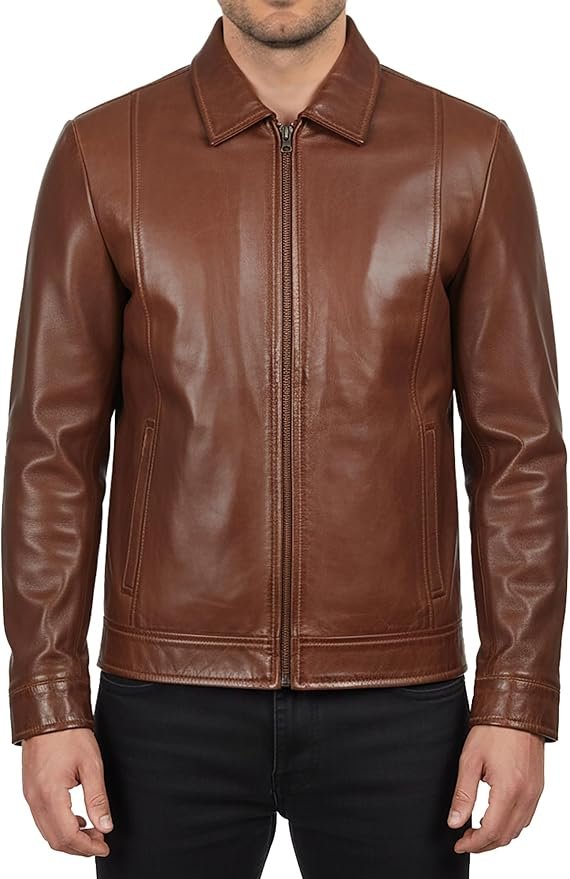
When you aim to identify real premium leather jacket value, you must look at the “hardware” and the stitching. A manufacturer that spends money on top tier leather will not use cheap zippers.
Zippers and Snaps: Look for heavy duty, polished metal zippers (like YKK or Excella). They should glide smoothly without catching.
Stitching: High end jackets feature tight, straight stitching with high quality thread. If you see loose threads or “skipping” in the seams, the jacket would not last more than a season, regardless of whether the leather is real.
The Weight: Real premium leather jacket is significantly heavier than synthetic. A premium leather jacket should feel substantial on your shoulders a physical reminder of its durability.
Conclusion
Learning how to identify real premium leather jacket quality is a skill that pays for itself. In a world of fast fashion, choosing an authentic piece is a statement of intent.
It shows that you value craftsmanship, sustainability and timeless style. Use these tests the next time you shop, and you will never be disappointed by a purchase again.
FAQs: About The Quality Check: 5 points to Identify Real Premium Leather Jacket Quality
1. Does "Genuine Leather" mean it’s high quality?
Surprisingly , no. “Genuine Leather” is actually a technical grade that is quite low. It is made from the remaining layers of the hide after the top layers are stripped away. For true luxury, look for “Full-Grain” or “Top-Grain.”
2. Can I use the "Fire Test" to check quality?
While real leather does not catch fire easily (it chars), we do not recommend this. It can ruin a perfectly good jacket. Stick to the smell and touch tests.
3. Why does my real leather jacket have a slight scar on it?
This is actually a good sign! Small scars or vein marks prove you are looking at a natural, full grain hide that has not been sanded down to hide its origin.
4. Is "Vegan Leather" just another name for plastic?
In most cases, yes. Most vegan leather is made from Polyurethane (PU) or PVC. While animal friendly, it does not have the longevity or breathability of real leather.
5. Will real leather peel over time?
No. Real leather may fade or dry out if not conditioned, but it will never “peel” like a plastic jacket does. Peeling is a guaranteed sign of synthetic material.
6. How can I tell if the leather is "Corrected Grain"?
Corrected grain feels very smooth and almost waxy because it has been sanded and spray painted to look uniform. It is lower quality than uncorrected full grain.
7. Does the "Water Test" damage the jacket?
If you use just a tiny drop on an inconspicuous area, no. Real leather will darken slightly as it absorbs the moisture, while water will just sit on top of faux leather.
8. Why is lambskin so much softer than cowhide?
Lambs are smaller and their skin is much finer. This results in a thinner, more supple leather that is the “gold standard” for luxury fashion jackets.
9. Should a real leather jacket be stiff when new?
Some types, like heavy steerhide, can be stiff. However, premium lambskin or goatskin should be soft and comfortable from the very first day.
10. How do I know if the lining is high quality?
Check the tag. If the lining is silk, cupro or high end viscose, the manufacturer has likely used high quality leather for the shell as well.