
From Chaos to Calm: 5 Soul-Soothing Yoga Moves for Absolute Beginners
Yoga is often misunderstood as a practice reserved for the flexible or the athletic, but its true purpose is much deeper and more inclusive. It is a tool for self-regulation and a sanctuary for the spirit. For those who feel they are living in a state of constant noise, these yoga moves for absolute beginners offer a way to turn down the volume of the outside world. By focusing on the breath and moving the body with kindness, you can create an internal environment of peace. This guide is designed to take you from a place of stress to a state of serenity through five foundational poses that anyone can master.
Table of Contents Regarding ( From Chaos to Calm: 5 Soul-Soothing Yoga Moves for Absolute Beginners )
Introduction
In this modern age, the concept of “doing nothing” is often viewed with guilt or skepticism. We are taught that every moment should be optimized, yet we wonder why we feel so exhausted. Yoga challenges this narrative by suggesting that our greatest strength comes from our ability to be still and present. When you begin your journey with these yoga moves for absolute beginners, you are not just stretching your muscles; you are retraining your nervous system to relax. You are giving yourself permission to disconnect from the chaos and reconnect with your own heartbeat.
The beauty of a beginner’s practice lies in its simplicity. You do not need to understand complex Sanskrit terminology or hold poses for long, grueling periods. Instead, you are invited to explore how your body feels in space. This process of exploration is inherently healing. As you move through the following sections, remember that there is no “perfect” way to look in a pose. The goal is simply to feel better than you did when you first stepped onto your mat.
1. The Gentle Surrender of Child’s Pose
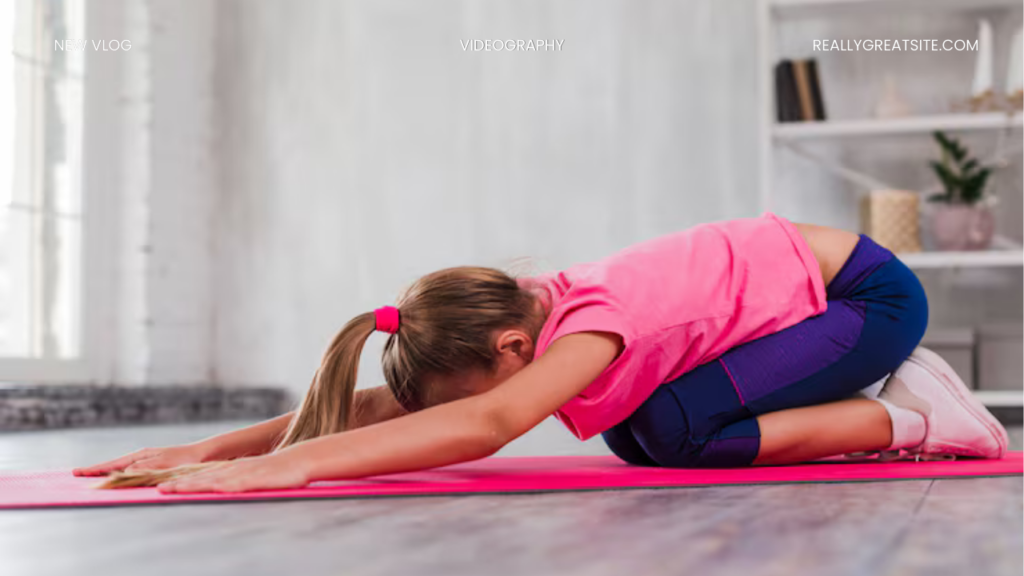
When the weight of daily responsibilities feels like too much to carry, Child’s Pose serves as your personal refuge. To enter this pose, kneel on the floor and bring your big toes together so they touch. Sit back on your heels and slowly fold your body forward, letting your forehead rest gently on the mat or a firm cushion. You can stretch your arms forward to feel a slight opening in the shoulders or rest them beside your legs for a deeper sense of security. This is one of the most effective yoga moves for absolute beginners because it physically closes off the external world, allowing you to turn your gaze inward.
As you breathe in this position, focus on the sensation of your back expanding. In this modern age, we rarely take the time to breathe into the back of our bodies, yet this is where we hold a significant amount of hidden tension. Child’s Pose encourages the spine to lengthen and the hips to soften, sending a direct signal to your brain that it is safe to let go. Hold this position for as long as you need, imagining each exhale as a way to release a specific worry or stressor from your mind.
2. Finding Flow with Cat-Cow Stretching
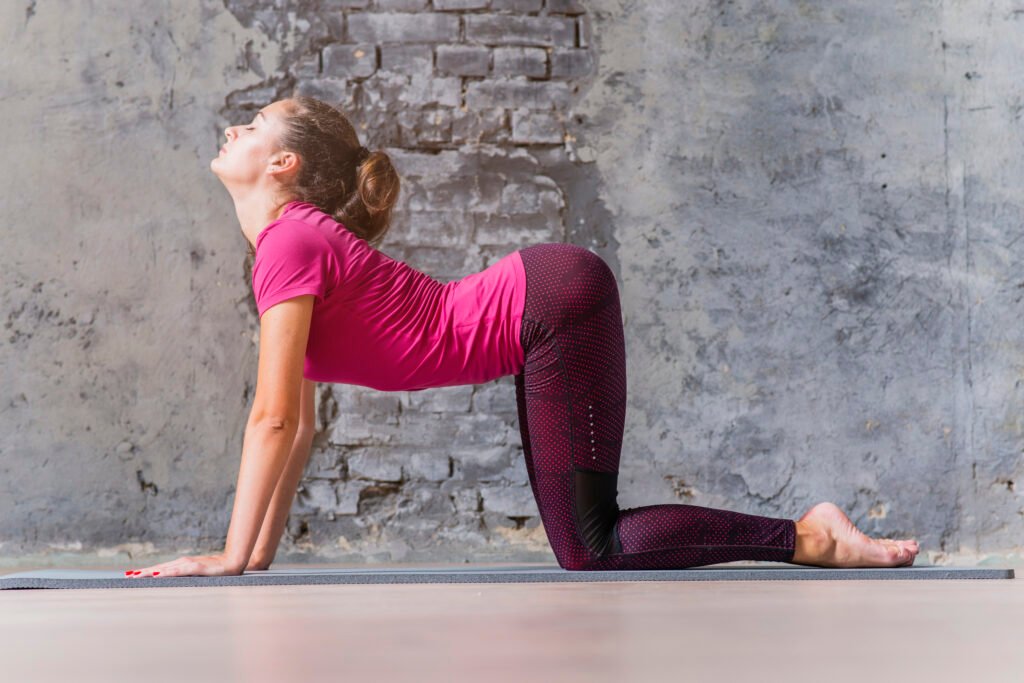
For many beginners, the spine can feel like a rigid pillar due to hours spent sitting at desks or driving in traffic.”Arrange your body on your hands and knees so that your back is level, with your arms forming straight lines directly from your shoulders to your wrists. The Cat-Cow sequence is a dynamic duo of movements that brings liquid grace back to your back. As you inhale, drop your belly toward the floor and lift your gaze toward the sky to enter Cow Pose. As you exhale, pull your belly button toward your spine and round your back like a cat, tucking your chin to your chest.
This rhythmic flow is essential among yoga moves for absolute beginners because it synchronizes movement with breath. In this modern age, our breathing is often shallow and restricted to the upper chest. By moving through Cat-Cow, you are forced to take deeper, more intentional breaths. This movement massages the internal organs and lubricates the joints of the spine, helping to alleviate the physical “stuckness” that often accompanies mental stress. It is a moving meditation that clears the path for energy to flow freely through your body once again.
3. The Grounded Strength of Mountain Pose
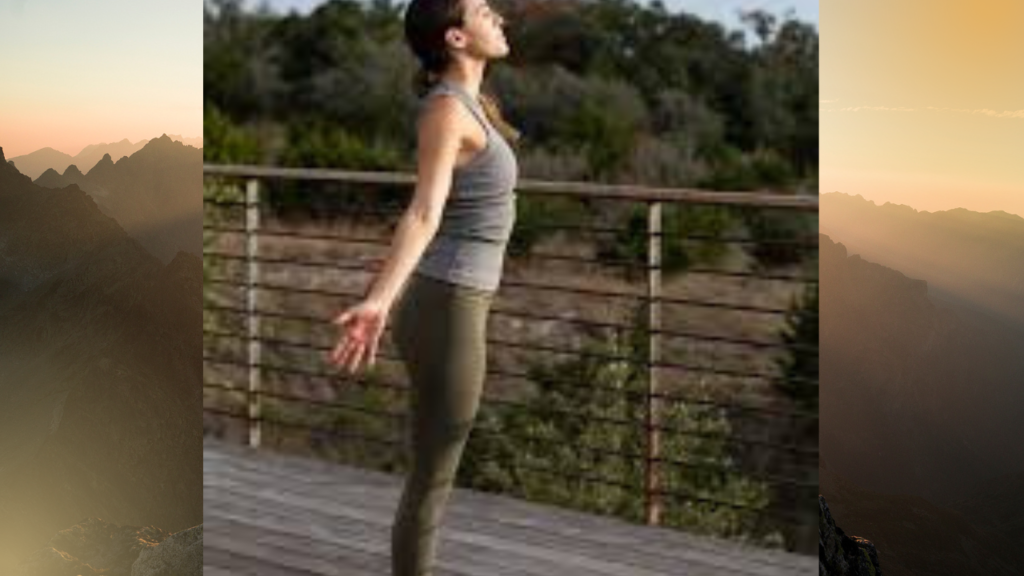
It is a common misconception that yoga must involve complex shapes to be effective. Mountain Pose is a testament to the power of standing still with intention. To practice this, stand with your feet together and your arms at your sides, palms facing forward. Engage your thigh muscles, draw your tailbone slightly downward, and imagine a golden thread pulling the crown of your head toward the ceiling. While it may look like you are simply standing, you are actually engaging every muscle group to create a posture of absolute stability and grace.
In this modern age, we often feel like we are being pulled in a thousand different directions. Mountain Pose teaches us how to find our center and stay grounded regardless of the winds blowing around us. It is one of the most important yoga moves for absolute beginners because it builds the foundational awareness needed for all other poses. When you stand in Tadasana, you are practicing the art of being present and unshakeable. Take several deep breaths here, feeling the strength of your legs and the openness of your heart, reminding yourself that you are capable of handling whatever the day brings.
4. Releasing Tension in a Standing Forward Fold
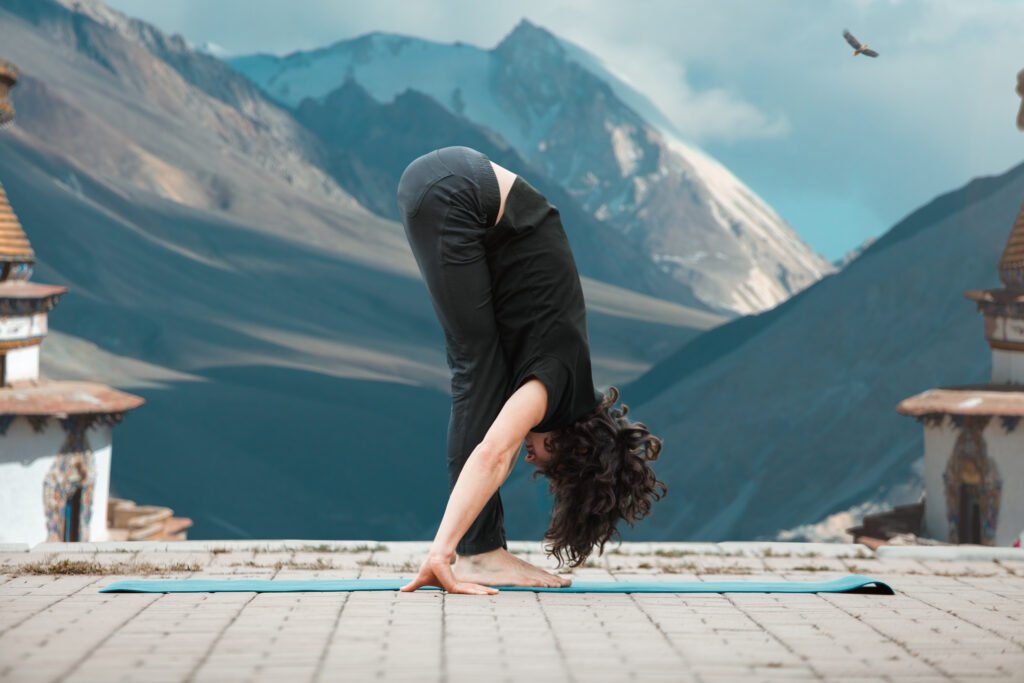
There is something incredibly therapeutic about letting the head hang below the heart. The Standing Forward Fold is a pose of deep release and mental quietude. From a standing position, exhale as you bend forward from your hips, keeping a generous bend in your knees to protect your lower back. Let your arms dangle toward the floor or grab opposite elbows to create a “ragdoll” sensation. The key here is to let your head and neck go completely, allowing gravity to do the work of decompressing your spine.
This pose is particularly beneficial for those struggling with the mental clutter of this modern age. By reversing the flow of blood and bringing it toward the brain, you encourage an immediate sense of calm and clarity. It is one of the yoga moves for absolute beginners that offers instant gratification, as you can feel the hamstrings lengthening and the tension melting out of the base of your skull. As you hang there, visualize all your chaotic thoughts falling out of the top of your head and onto the floor, leaving your mind clear and refreshed.
5. The Deep Peace of Corpse Pose
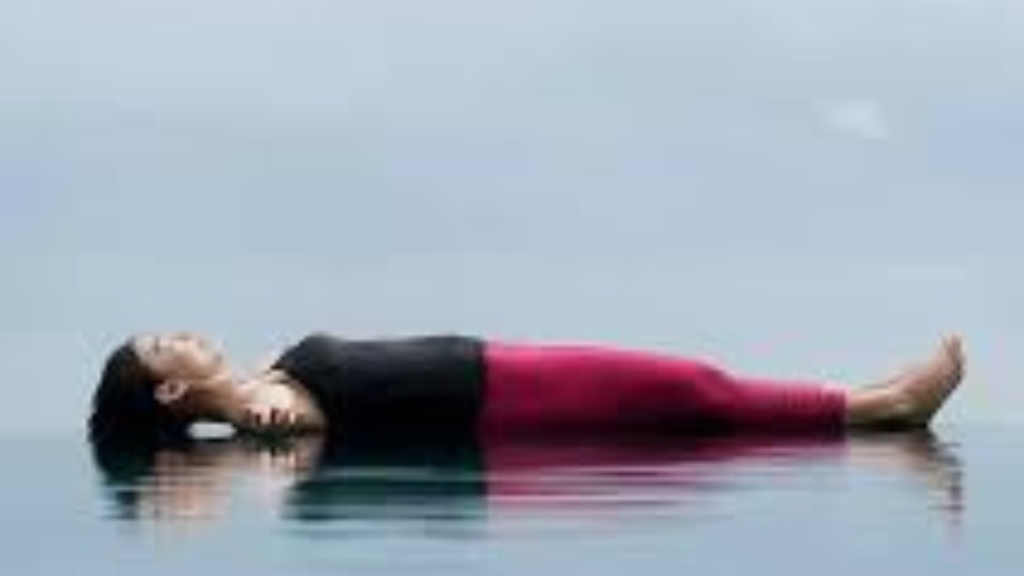
Every yoga session should culminate in the most profound pose of all: Savasana, or Corpse Pose. While it may appear to be a simple nap, it is actually a state of high-level conscious relaxation. Lie flat on your back with your legs spread comfortably and your arms resting at your sides, palms facing up. Close your eyes and allow your breath to become effortless. Your only task is to remain still and observe the sensations in your body without trying to change anything.
In this modern age, we are conditioned to believe that our value is tied to our constant motion. Savasana teaches us the opposite—that our true essence is found in the stillness that exists beneath the activity. This is the most vital of all yoga moves for absolute beginners because it allows the body to integrate the physical and emotional work of the previous poses. As you lie in silence, you may find that the chaos of the day has been replaced by a quiet, steady calm. This is your true nature and it is always available to you whenever you choose to slow down.
Conclusion
The transition from chaos to calm is not a one-time event but a continuous journey. In this modern age, we must be diligent about protecting our peace of mind. Incorporating these yoga moves for absolute beginners into your daily life can act as a powerful anchor. You do not need hours of free time, even ten minutes spent intentionally on your mat can shift your perspective and improve your physical health. The goal is to create a sustainable habit that honors your body’s need for rest and recovery.
Be patient with yourself as you learn these new movements. Some days will feel easier than others and that is perfectly natural. By showing up for yourself with consistency and compassion, you are building a foundation of health that will support you through all the challenges of life. The path from chaos to calm is always right beneath your feet.
(FAQs)about From Chaos to Calm: 5 Soul-Soothing Yoga Moves for Absolute Beginners
1. Is yoga effective if I can only do it for ten minutes a day?
Yes, consistency is far more important than duration. In this modern age, finding even ten minutes for these yoga moves for absolute beginners can significantly lower your stress levels and improve your physical flexibility over time.
2. What if I cannot touch my toes in the Standing Forward Fold?
Touching your toes is not the goal of yoga. The purpose is to feel a stretch and release tension. Always keep your knees bent as much as necessary, the benefits of the pose come from the release in your back and neck, not the reach of your fingers.
3. Do I need to be young or fit to start practicing yoga?
Yoga is a practice for every body, regardless of age or fitness level. These yoga moves for absolute beginners are designed to be accessible and safe for everyone, focusing on gentle movements that build strength and flexibility gradually.
4. Can these poses help with chronic back pain?
Many people find that moves like Cat-Cow and Child’s Pose provide significant relief for lower back tightness. However, if you have a specific medical condition, it is always wise to consult with a professional before starting a new exercise routine.
5. Why do I feel emotional after a yoga session?
It is very common to experience an emotional release during yoga. In this modern age, we often “store” stress in our muscles. When we stretch and open those areas, those suppressed emotions can surface. It is a healthy part of the healing process.
6. Do I need any special equipment to get started?
All you really need is a comfortable space to move. A yoga mat is helpful for grip and cushioning, but you can easily begin on a firm rug or carpet. Comfort and safety are the only real requirements.
7. How should I breathe while performing these moves?
Try to breathe slowly and deeply through your nose. In this modern age, we are often “chest breathers,” but yoga encourages “belly breathing,” which helps to calm the nervous system and deepen the physical stretch.
8. Can I practice yoga if I have high blood pressure?
Gentle yoga is generally very beneficial, but you should avoid holding your breath and be cautious with poses where your head is below your heart for long periods. Always listen to your body and move at a pace that feels comfortable.
9. Is it better to practice yoga on an empty stomach?
Most practitioners find it more comfortable to wait at least an hour or two after a heavy meal before practicing. A light snack is usually fine, but a full stomach can make twisting and folding movements feel uncomfortable.
10. Where can I find more resources for my beginner journey?
We are dedicated to providing human-friendly guides and wellness tips to help you thrive in this modern age. We invite you to explore our other articles on health, exercise, and finding your inner peace.