
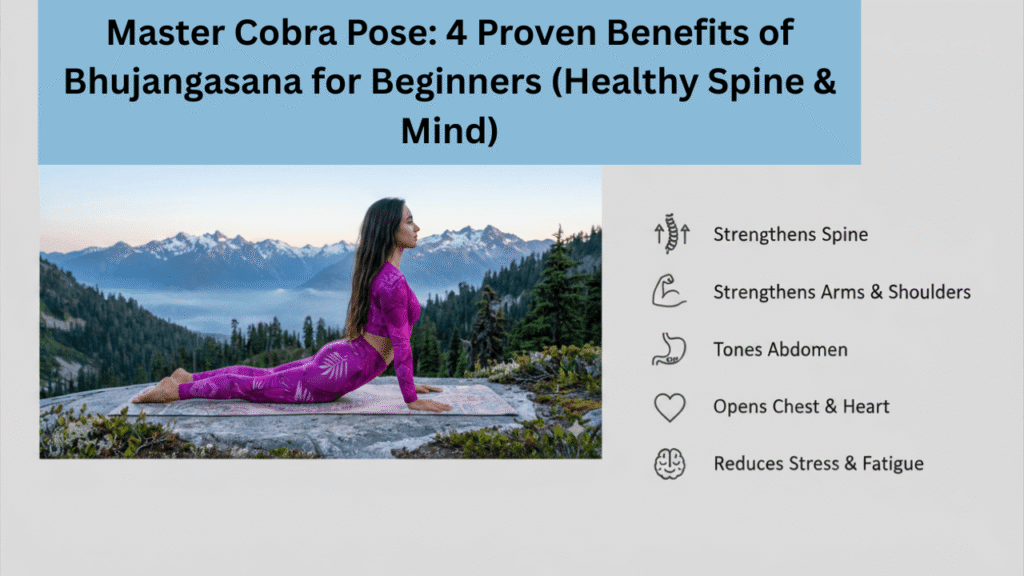
Let us face it, sitting all day wrecks our posture. I will walk you through Cobra Pose for beginners (Bhujangasana) step by step. You will learn how this simple stretch can fix your posture, calm your mind and give you a healthy spine.
Table of Contents
Introduction
Cobra Pose for Beginners, also known by its Sanskrit name, Bhujangasana is so much more than just a simple stretch. These days, the way we look at wellness has completely changed. It is no longer just about hitting flexibility goals or showing off a perfect shape. Instead, it is about how our physical movements can actually soothe our nervous systems and melt away the mental stress we carry around all day.
If you are completely new to yoga, here is the most important thing to know, mastering this pose is not about forcing your body into a dramatic, rigid backbend like you see in glossy magazines. In fact, pushing too hard is exactly how people get hurt
In this guide, we are going to move beyond simple instructions. You will discover 4 proven, life changing benefits of practicing Cobra Pose for Beginners, common mistakes to avoid and a complete, safe step by step guide to help you find spinal freedom and mental calm. Your wellness journey is not just about strength, it is about feeling your way back to balance.
What is Cobra Pose for beginners (Bhujangasana)?
Cobra Pose for beginners is a classic, essential backbend. Its Sanskrit name, Bhujangasana, literally translates to “Cobra Pose” because the movement looks exactly like a cobra gracefully lifting its hood.
But Cobra Pose is far more than just a transitional movement.Think of it as the perfect fix for the stress and physical tension that come from our busy, screen filled lives.
To do it, you simply lie face down on your mat and use the strength of your back and core to gently lift your chest off the floor. It looks simple, but do not let that fool you. For anyone dealing with a stiff body or a busy mind, this beginner friendly stretch offers a massive mix of physical and mental benefits that work together to make you feel amazing.
The 4 Proven Benefits of Bhujangasana: Healthy Spine, Healthy Mind
It solves two primary pain points of Cobra Pose for beginners. posture correction and stress management.
Here are the four life changing, proven benefits of mastering Cobra Pose for Beginners.
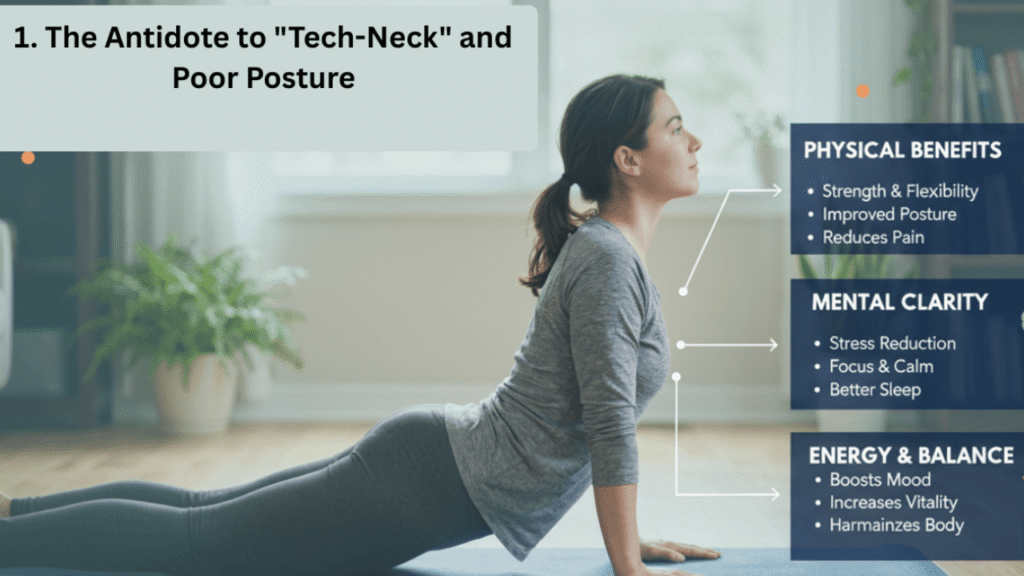
1. The Antidote to "Tech-Neck" and Poor Posture
This is the number one reason people search for this pose. If you spend your day hunched over a laptop or phone, you are training your upper back muscles to lengthen and weaken, while your chest muscles become tight and short.This imbalance creates that chronic, aching posture we all want to avoid.
Practicing Cobra Pose for beginners is like pressing a giant reset button on your posture. When you lift your heart and gently pull your shoulders back, you are opening up your chest and unwinding all that tension from slouching forward.
Even better, it strengthens the hidden support muscles that run down your back. This means you are not just forcing yourself to stand up straight, your body is naturally building the strength it needs to keep you standing tall and moving without pain.
2. Strengthens the "Posterior Chain" Without Injury
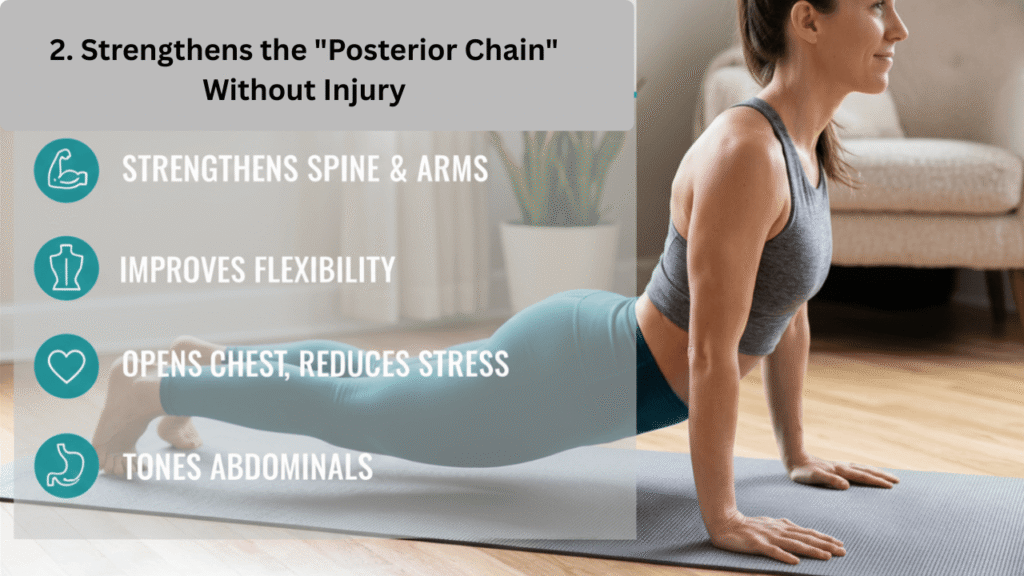
Many back strengthening movements can be intimidating for beginners and easily lead to pulls or strains. That is what makes Cobra Pose so amazing. It gives you a safe way to build real strength in your back and glutes without forcing your spine past its comfort zone.
This builds up the muscles along the back of your body, which act like a protective shield for your spine. Daily movements like lifting groceries, bending down or simply sitting at your desk become so much easier and completely pain free.
.
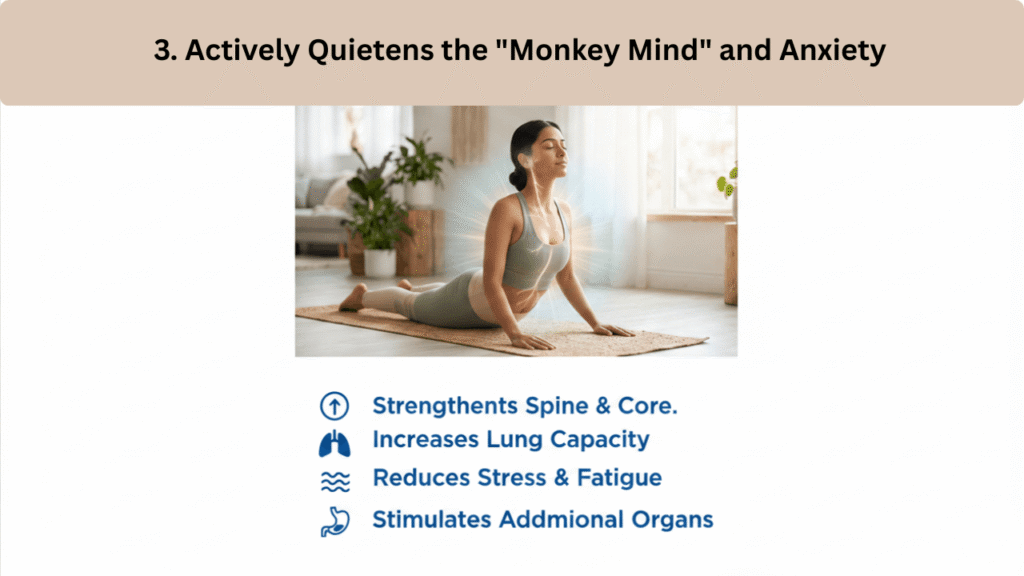
3. Actively Quietens the "Monkey Mind" and Anxiety
Have you ever noticed that when life gets overwhelming, When you feel anxious, your natural instinct is to hunch your shoulders and shrink inward, almost like you are “closing up” to protect yourself from the world. We pull our shoulders up and round our backs as if we are trying to shield ourselves from the day. But here is the thing hunching over actually sending a signal to your nervous system to stay on high alert.
Cobra Pose for beginners is the perfect way to reset. By gently stretching your front and opening your chest, you tell your brain it is okay to relax. It is a simple, physical trick that pulls you out of survival mode, offering instant relief for a noisy, anxious mind in our busy world.
4. Stimulates the Vagus Nerve for Instant Neurowellness
Everyone is talking about this benefit. When you open up your chest and gently stretch your neck in Cobra Pose, you are actually giving your vagus nerve a loving nudge. This nerve is a direct, calming highway that runs from your brain all the way down to your stomach.
This highway is responsible for your body’s “rest and digest” system. When you activate it, your heart rate slows down, your blood pressure goes down and a lovely wave of calm floods your body. Practicing Cobra Pose for Begineers is like giving your brain a masterclass in how to stay cool, resilient and relaxed under pressure.

How to Master Cobra Pose for Beginners: Step by Step Guide
Here is your definitive, step by step guide to practicing Cobra Pose for Beginners safely.
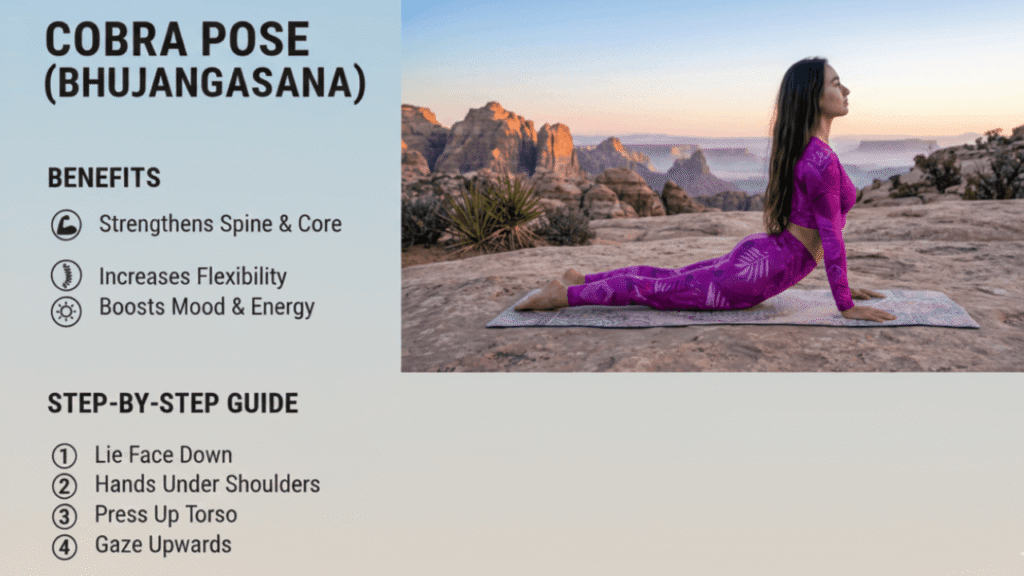
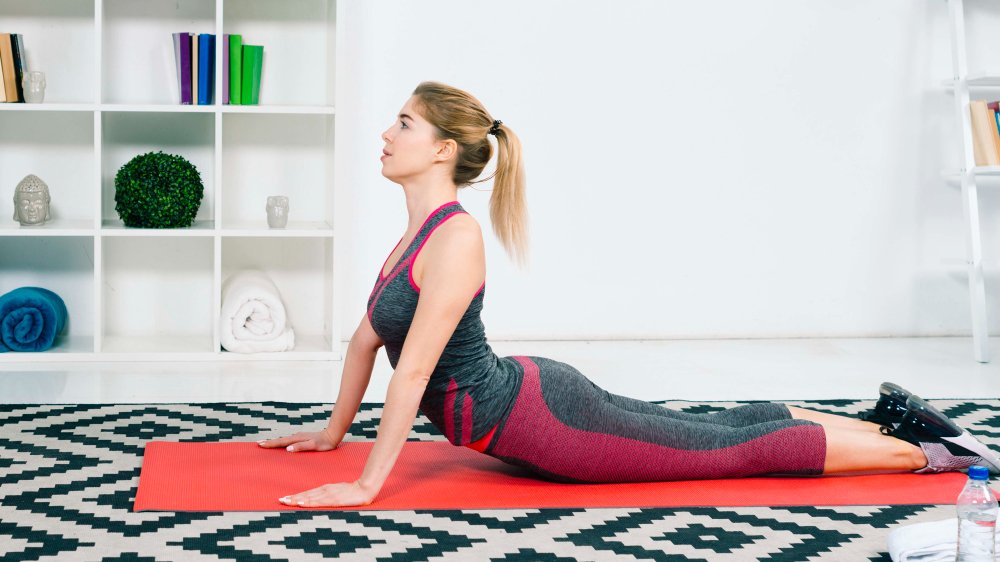
The Setup Lie Down: Begin by lying flat on your stomach on your yoga mat. Extend your legs straight behind you, hip width apart.
Activate the Legs (Crucial Step): Press the tops of your feet firmly into the mat. This should be so active that your kneecaps lift slightly. Squeeze your inner thighs toward each other to stabilize the lower back. This grounding is what makes Cobra Pose for Beginners safe.
Place the Hands: Place your hands directly under your shoulders. Hug your elbows in close to your ribs think of “cricket wings” not “chicken wings.”
The Lift (The Inhale) Engage and Peel: On an inhale, begin to gently lift your chest off the mat. Use the power of your back and core muscles, not your arm strength.
No Arms Needed: For the first few lifts, try hovering your hands an inch off the floor. If you can not lift your chest without pushing with your hands, Cobra Pose for Beginners is the right modification keep the lift low and focused only on the back muscles.
Shoulders Down: Consciously roll your shoulders down and back, away from your ears. Keep the heart projecting forward, not just up.
The Gaze and Release (The Exhale) The Drishti (Focal Point): Keep your gaze (Drishti) soft and straight ahead or slightly upward, depending on your neck comfort. Do not crunch your neck back to look at the ceiling. Keep the back of your neck long. This protects your cervical spine and maintains intense mental focus.
Exhale and Lower: Breathe smoothly for one to three cycles. On an exhale, slowly and gently release your chest and forehead back down to the mat.
Common Mistakes Beginners Make and How to Fix Them
Do not let frustration derail your practice.Be careful to avoid these three common mistakes.
Mistake 1: Forcing the Height with Arm Strength. This is often caused by stiffness and creates a dynamic tension in the lower back (compression).
The Fix: Focus on upper back opening rather than how high it looks. Keep your arms bent for a baby cobra.
Mistake 2: Tech-Neck in the Pose. First, do not hunch your back or stick your chin out.
The Fix: Lead with your heart, not your chin. Gently pull your shoulders back and squeeze them together. Imagine you are trying to hold a pen right between them without letting it fall.
Mistake 3: The “Monkey Mind” Distraction. Trying to rush through the pose.
The Fix: Narrow your focus to your breath. When you focus your eyes on one steady spot, it helps quiet the busy thoughts inside your mind.
Integrating Cobra Pose Into Your Practice
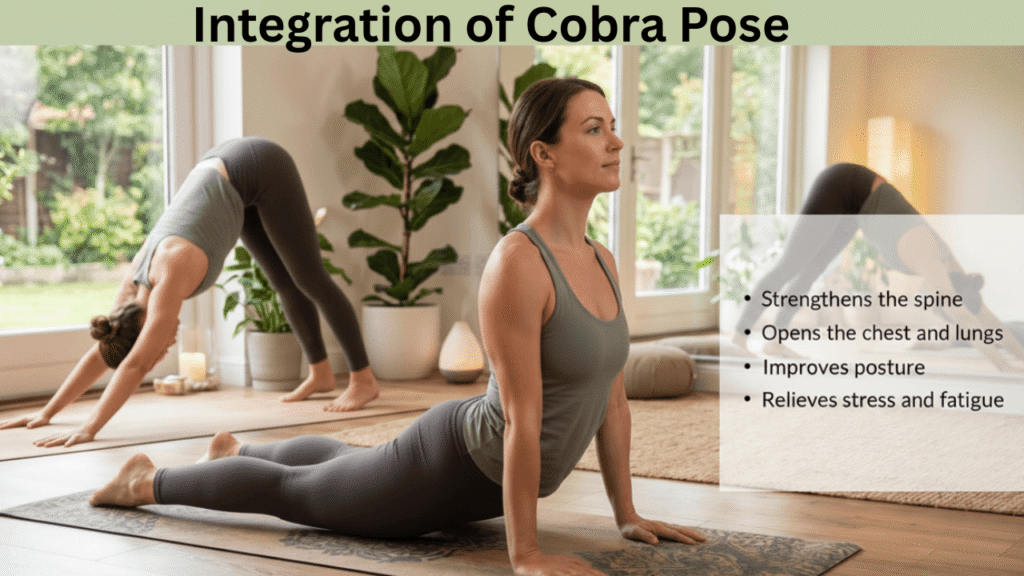
Cobra Pose for beginners is the perfect companion to Downward Dog Yoga Pose. While Downward Dog stretches out your hamstrings and opens your shoulders in a deep fold, Cobra Pose does the exact opposite giving your chest a beautiful opening and your spine a much needed backward stretch.
When you practice Cobra Pose for beginners, you are building a really solid foundation for your whole practice. It brings together the deep, quiet focus you need for balancing shapes (like calming a busy mind in Tree Pose) with the healthy spinal movement your body craves to feel comfortable every single day.
By mastering Cobra Pose for Beginners, you are building a balanced yoga foundation. You are integrating the intense mental clarity we aim for in focus driven practices (like focusing the “monkey mind” in Tree Pose) with the essential spinal mechanics your body needs for daily comfort.
Bloom Fitness my you tube channel supports Cobra Pose
Conclusion
Cobra Pose for beginners is one of the easiest yoga pose, it is about building a resilient body and a peaceful mind. Cobra Pose is an absolute game changer for beginners. If you try practicing this beautiful, heart opening stretch just three times a day to give your spine some relief and your mind a much needed break.
Yoga is simply about feeling your way toward a natural balance. Stay grounded, breathe deeply and just focus on how good it feels to move.
(FAQs) About Master Cobra Pose: 4 Proven Benefits of Bhujangasana for Beginners (Healthy Spine & Mind)
1. I feel a sharp pinch in my lower spine when I lift into Cobra. What should I do?
Stop immediately. This is compression. It usually means you are using arm strength to crank your spine higher than your current back strength allows.
It can also mean you are not grounding your pubic bone and legs firmly into the mat. Lower down to a “baby cobra” height and focus only on the back muscles.
2. My wrists are weak. Can I do this pose without pressure on my hands?
Yes! The correct alignment of Cobra Pose for Beginners does not use arm strength to push up. You can perform “baby cobra” by lifting only with back strength and hovering your hands. Alternatively, try Sphinx Pose, resting on your forearms instead of your palms.
3. Should I squeeze my glutes (gutt muscles) while in Cobra Pose?
This is a conflicting instruction online. A gentle engagement of the glutes is often necessary for Cobra Pose for Beginners to ground the pelvis and support the lower back. However, do not clench them excessively, as this can compress the sacroiliac joint. Find the balance.
4. How does "heart opening" stimulate the vagus nerve?
When you gently lift and open the chest in Cobra Pose for Beginners, you extend the front of the throat and rib cage, providing subtle, calming pressure to the vagus nerve. This nerve is the parasympathetic nervous system highway that immediately decreases heart rate and lowers blood pressure.
5. Why do my hips lift off the mat when I try to go higher?
This is a very common beginner’s mistake. It means you are forcing height rather than spinal opening. When practicing Cobra Pose for Beginners, your pelvis and hips must remain grounded. If they lift, you have moved past the range of your spinal extension and are stressing other joints.
6. Can I practice this pose safely on my bed instead of a mat?
While a firm surface is ideal, yes. You can use the bed for Cobra Pose for Beginners first thing in the morning to find immediate relief from the rigidness of sleep. Bed practice is gentle but still stimulates the nervous system.
7. My neck feels "crunchy" when I look up. How do I fix my gaze (Drishti)?
Do not prioritize looking at the ceiling. Lead the lift with your breastbone. Keep the back of your neck long by looking softly forward or at a spot on the wall opposite you. If your neck crunches, you are jutting your chin up too much and compressing the cervical spine.
8. How many repetitions of Cobra Pose do I need each day to fix "tech-neck"?
Consistency is key. Mastering Cobra Pose for Beginners only requires you to practice it three to five times for 10–15 seconds each day. Consistent daily practice, combined with sitting upright at your desk, will see permanent improvements within 4–6 weeks.
9. Which is better for beginner back pain relief: Cobra Pose or Downward Dog?
They solve different pain points. Cobra Pose strengthens the lower back and opens the chest (excellent for desk sitters), while Downward Dog creates length and decompression in the entire posterior chain (hamstrings/spine). Cobra Pose is often the first step to stabilizing back strength before the extreme stretch of Downword Dog.
10. What is the mental focal point supposed to be in this pose?
Unlike the outward focus in standing balances (Tree Pose), Cobra Pose for Beginners encourages an inward focal point. Bring your mental Drishti to your breath flowing into your rib cage, or to the sensation of opening across your collarbones. Still gaze, still mind.