
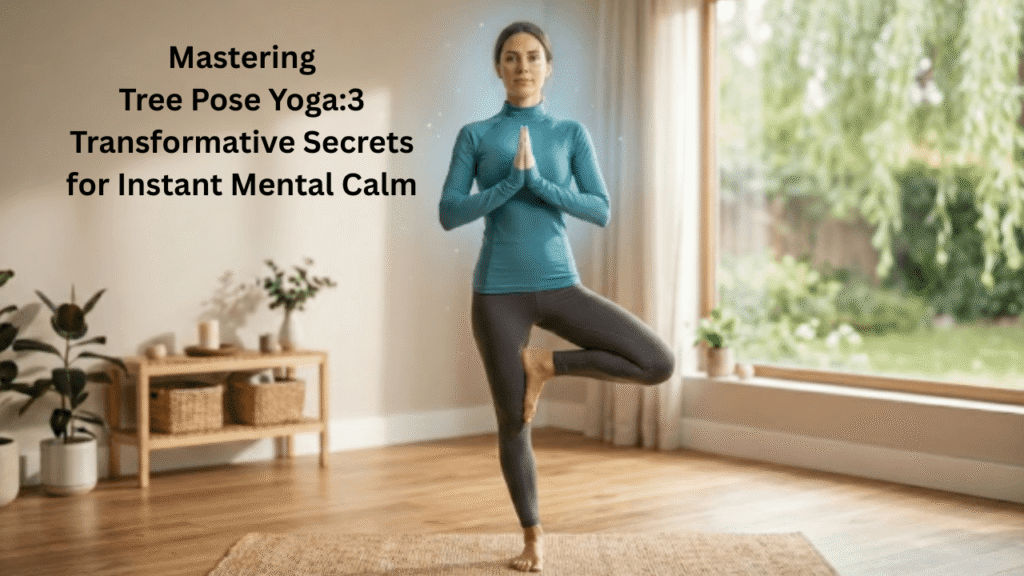
Discover how Tree Pose Yoga (Vrksasana) can transform your mental health. Learn 3 proven secrets to master this balance pose for instant calm, better focus and a grounded lifestyle today.
Table of Contents
Introduction
Tree Pose Yoga is much more than a simple balancing act on your mat, it is a gateway to a quieter mind and a more centered life. Amidst the relentless rush of contemporary life, capturing a quiet pause can be difficult.
However, by practicing this ancient posture, you can unlock a sense of peace that stays with you long after you have stepped off the mat.
Irrespective of whether you are a devoted exercise lover or simply seeking to boost your overall wellness. your mental health, understanding the nuances of Vrksasana can change your entire day.
Let’s dive into how you can master this pose and why it is the “secret weapon” for your mental well being.
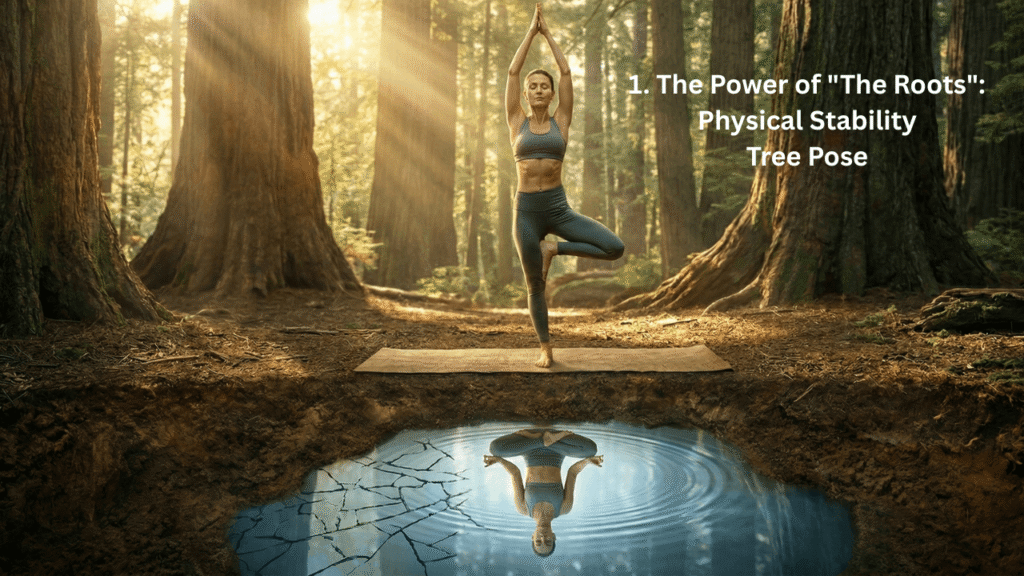
1. The Power of "The Roots": Physical Stability
To find success in Tree Pose Yoga, you must first learn to ground yourself.
Stability in this pose starts with your standing leg. When you “root” your foot
into the earth, you are engaging your stabilizer muscles and your core.
This physical grounding acts as a mirror for your mind. When your body feels secure
and connected to the floor, your brain begins to let go of the “flight or fight” response,
paving the way for instant calm.
2. The Drishti Secret: Sharpening Mental Focus
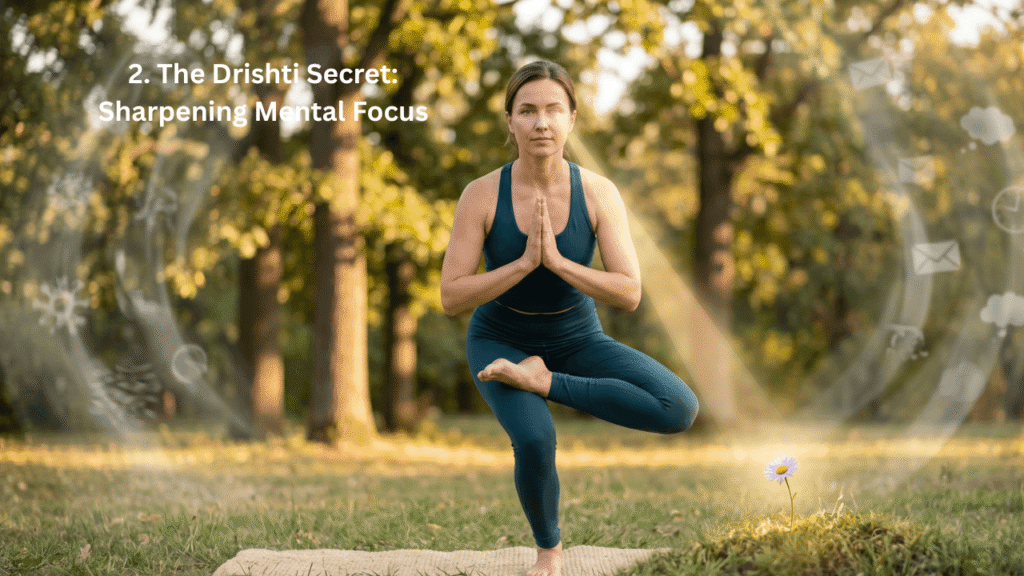
The true mental magic of Tree Pose Yoga lies in the “Drishti” or your focus point.
Because this pose requires immense balance, your eyes must remain fixed on a single, non moving spot. This practice trains your brain to ignore distractions.
By narrowing your external gaze, you naturally narrow your internal thoughts, facilitating the stilling of mental restlessness and improve your concentration for hours afterward.
3. Breathing Through the Sway: Stress Resilience
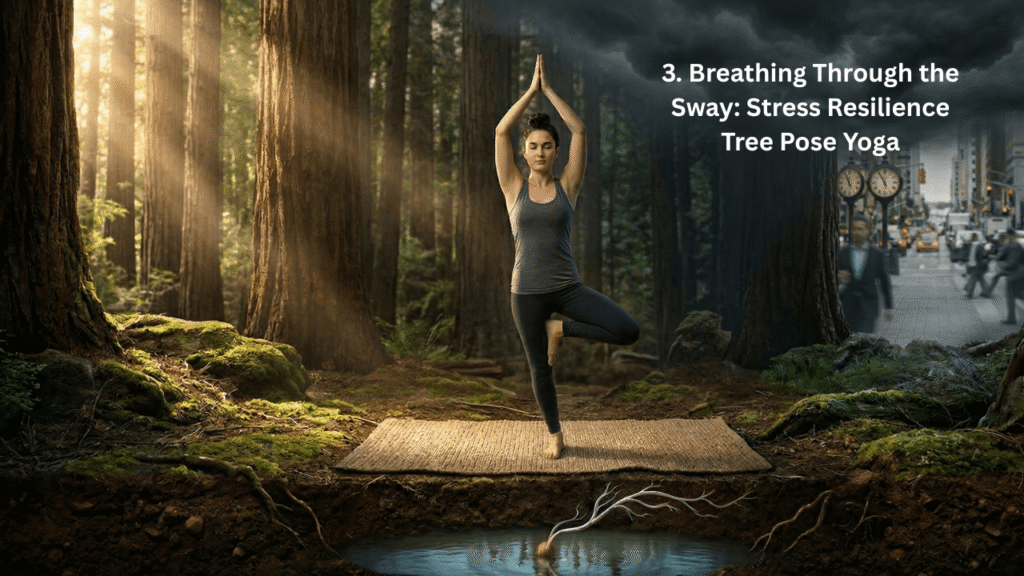
One of the most important things to remember about Tree Pose Yoga is that it is okay to wobble. In fact, the wobble is where the growth happens. By maintaining a deep, steady breath while your body tries to find its center, you are teaching your nervous system how to stay calm under pressure.
This translates directly to real life, when stress hits, your body remembers how to breathe through the “sway” without falling over.
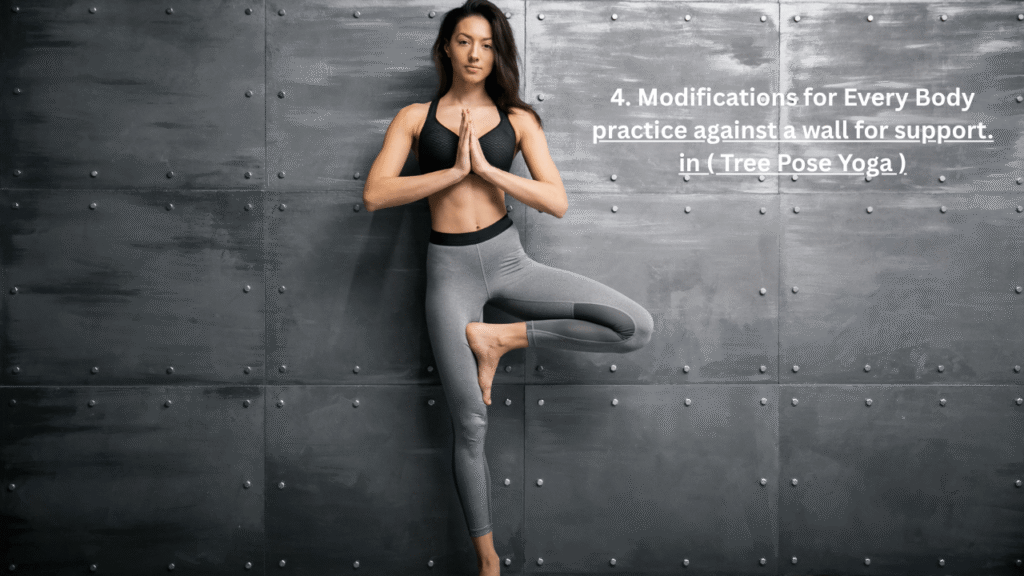
4. Modifications for Every Body
Honestly, you do not need perfect balance to enjoy Tree Pose. If you are feeling a bit wobbly today, just turn your foot into a “kickstand” by keeping your toes firmly on the mat. It is a game changer for staying steady while still getting all the benefits.
You can also practice against a wall for support. The goal is not to look like a perfect statue, the goal is to feel the connection between your breath and your balance.
Acknowledging your current starting point is the first step toward better mental health.
A You Tube Video Supports ( Tree Pose Yoga) (Vrksasana)
Conclusion
Incorporating Tree Pose Yoga into your daily routine is a simple yet profound way to enhance your both physical fitness and mental clarity. When you focus on grounding your feet, steadying your gaze and slowing down your breath, you naturally create a quiet, peaceful space right inside yourself.
Remember, like a tree, your strength comes from your ability to remain grounded while being flexible enough to move with the wind.
(FAQs) About Mastering Tree Pose Yoga:3 Transformative Secrets for Instant Mental Calm
1. What are the main benefits of Tree Pose Yoga?
It improves physical balance, strengthens the legs, core, significantly enhances mental focus and stress resilience.
2. Can beginners practice this pose?
Yes! Beginners can start with their foot at the ankle (kickstand version) or use a wall for balance until they feel more stable.
3. Why do I wobble so much in this pose?
Wobbling is a natural part of the process. It means your stabilizer muscles and nervous system are working together to find center.
4. Where should I place my foot?
Place your foot on your inner calf or inner thigh. Always avoid the knee joint to prevent injury.
5. How long should I hold the pose?
Aim for 30 to 60 seconds per side. Focus on quality and steady breathing rather than just the time.
6. Should I do this on an empty stomach?
Like most yoga, it is best practiced at least 2 hours after a heavy meal to ensure you feel light and focused.
7. Can this pose help with anxiety?
Yes. The intense focus requires for balance forces the mind away from anxious thoughts and into the present moment.
8. What should I do with my hands?
You can keep them at your heart center or reach them toward the sky like branches for an added challenge.
9. Is it better to practice on a hard floor or a mat?
A thin yoga mat on a firm surface is ideal. Avoid very thick, squishy mats as they can
make balancing much harder.
10. How often should I practice to see results?
Practicing even just two minutes a day can lead to noticeable improvements in your balance and mental focus within a few weeks.